AWP Green Energy CS2 Price Guide: How Much Is It Worth

Most AWP skins go dark, tactical, or fiery — this one went radioactive green and never looked back. The AWP Green Energy dresses CS2’s deadliest rifle in a metallic flake green coat with a yellow streak running the full length of the body, and it instantly became one of the most recognizable budget-friendly sniper skins in the game. But how much is it actually worth, and why do two copies with the same exterior sell at different prices? We broke down the design, floats, rarity, and market behavior so you can buy or sell with real numbers in hand. Spoiler: the answer ranges from pocket change to serious collector money, and one small number decides which side you’re on.

What Is the AWP Green Energy?

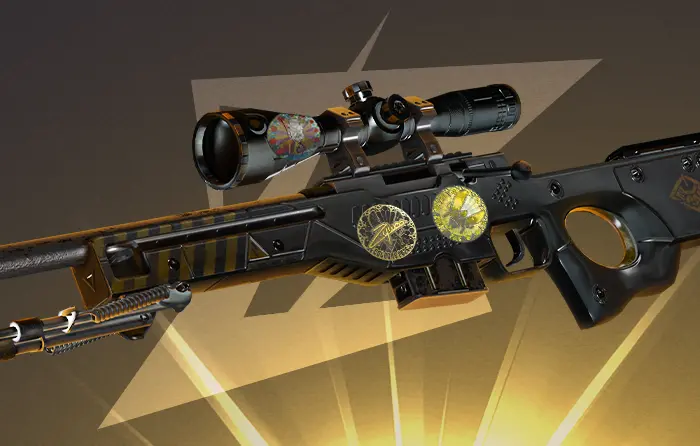
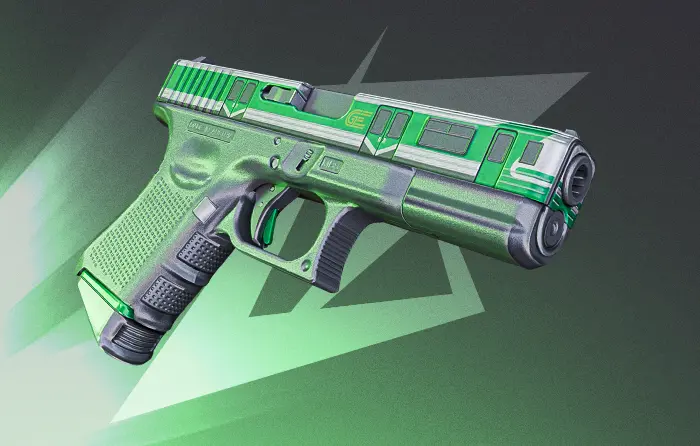
The AWP Green Energy is a Classified-grade skin from The Boreal Collection, added to CS2 on March 31, 2025 with the Spring Forward update. Valve painted it in a Custom Paint Job style: a deep green metallic flake covers the rifle, while a bright yellow streak runs from stock to barrel tip. The flavor text says it all — “Energy amplified.”

What makes the design pop is how unapologetically loud it is. Traditional AWP finishes lean on blacks, grays, and muted camo patterns; this one glows. Under Source 2 lighting the metallic flake shimmers as you move, so the rifle looks alive rather than flat. That makes it a natural centerpiece for themed inventories — it pairs beautifully with other green weapon finishes, green gloves like the Hedge Maze or Emerald webs, and matching agent sleeves.

The AWP Green Energy CS2 community adopted it within weeks — you see that yellow streak in matchmaking constantly.

Among the good AWP skins available today, the Green Energy carved out its own lane: colorful, modern, and cheap enough that you don’t need to baby it. If your loadout needs color instead of another black rifle, this skin delivers.

AWP Green Energy Price — How Much Is It Worth?

Here’s the short answer: the AWP Green Energy price can vary substantially between individual listings, and understanding why saves you money. Let’s walk through the six factors that move the number.

Exterior. Wear condition drives the biggest price gap. As of late August 2026, Battle-Scarred copies start around $4.00–$6.50, Well-Worn sits near $8.00–$10.00, Field-Tested hovers around $7.50–$10.00, Minimal Wear runs $18.00–$21.00, and the AWP Green Energy Factory New version commands roughly $36.00–$59.00 depending on the marketplace.

Float. Two items with the same exterior can carry different floats and visibly different wear. A 0.01 Factory New looks cleaner than a 0.069, and collectors pay for that difference.

StatTrak. Simple one: this skin has no StatTrak variant at all, so kill-counter demand never distorts its pricing. The only special version is the Souvenir edition, which plays in a totally different price league.

Stickers. A copy wearing four matching green stickers or a rare tournament paper can list well above market. Certain crafts genuinely command a premium — more on that below.

Market Supply. Supply is enormous. The skin enters the game through in-game drops, tens of thousands of copies exist, and listing counts stay in the thousands. Heavy supply keeps a ceiling on prices.

Buyer Demand. It’s one of the most popular budget AWPs, with a 4.0+ community rating across skin databases. Strong demand at the cheap end keeps liquidity high — you can move a Field-Tested copy fast.

AWP Green Energy Float Guide

Float is the single most useful concept for reading this market, so let’s make it practical. Every CS2 skin carries a float value between 0.00 and 1.00 — a hidden wear number assigned when the item is created. Lower means cleaner; higher means more scratches, fading, and chipped paint. The AWP Green Energy spans 0.00 to 0.75, so it exists in all five exterior categories, though Battle-Scarred tops out at 0.75 instead of a full 1.00.

AWP Green Energy Float Guide

The standard CS2 exterior ranges work like this:

  • Factory New: 0.00–0.07.
  • Minimal Wear: 0.07–0.15.
  • Field-Tested: 0.15–0.38.
  • Well-Worn: 0.38–0.45.
  • Battle-Scarred: 0.45–1.00 (0.75 for this skin).

Here’s why float matters beyond the label: two Field-Tested copies can sit at 0.16 and 0.37, and they won’t look alike. The 0.16 copy shows barely any wear, while the 0.37 one borders on Well-Worn territory. On a metallic flake finish like this, higher floats dull the shine and chew up the yellow streak along the body.

Collectors inspect exact float values because the number tells the truth that the category can’t. That’s also why low floats attract premiums — an AWP Green Energy FN at 0.008 floats in a different league than one at 0.065, even though both technically count as Factory New. When you shop, always open the inspect link and check the float yourself before paying extra for a “clean” listing.

Green Energy AWP CS2 Rarity & Availability

On paper, the Green Energy sits at Classified rarity — the pink tier, third-highest in the game, with a nominal drop chance around 3.2%. In practice, rarity works differently here. Every Green Energy AWP CS2 copy enters the market through in-game drops from The Boreal Collection rather than case openings, which means supply constantly grows as players earn weekly drops.

That pipeline explains the market shape. The skin launched in late March 2025 during the Spring Forward update, spiked hard in its first weeks — Factory New briefly traded at several hundred dollars — and then slid as thousands of new copies flooded in. Trackers now count thousands of active listings at any moment, and the CS2 Green Energy AWP has settled into its role as an affordable staple rather than a scarce trophy.

Availability shapes long-term demand in two ways. First, the endless supply caps how high regular versions can climb. Second, it pushes collector attention toward the edges: Souvenir editions from tournament packages, ultra-low floats, and clean sticker crafts. If you’re hunting something that holds value, those edges are where scarcity actually lives.

How Float and Wear Affect AWP Green Energy Value

Exterior category is only the starting point. “Field-Tested” covers a huge float window, and the market prices the extremes of that window very differently. A borderline Field-Tested copy at 0.151 can sell closer to MW money, while a 0.37 copy competes with Well-Worn pricing. Exact float distinguishes two items that wear the same label.

Low floats attract collectors for obvious reasons: cleaner flake, an intact yellow streak, and better resale stories. Visual inspection matters just as much as the number, though — paint wear shows up on the scope, barrel, and stock first, so inspect in-game screenshots rather than trusting a thumbnail.

When you evaluate any listing, compare it against equivalent conditions. An AWP Green Energy FT at 0.17 deserves comparison against other low-float FT listings, not against the cheapest 0.37 copy on the page. Match the float, match the look, then judge the price. That single habit filters out most overpriced listings before they waste your time.

AWP Green Energy Crafts: Stickers & Customization

A sticker craft is simple: someone applies one to four stickers to a weapon, and the combination either elevates the skin or clutters it. When it comes to AWP Green Energy crafts, the green canvas does half the work for you — green-themed stickers blend into the finish like they were designed for it.

Placement matters more than most buyers expect. The scope position puts a sticker front and center in first-person view, while body placements fill the silhouette. Four matching stickers give a uniform look; one rare paper on the scope works as an accent. Collector demand usually rewards cohesion — same palette, same event, same vibe.

Now the honest part: expensive stickers don’t automatically guarantee a large resale premium. A $200.00 sticker slapped on a $5.00 skin doesn’t produce a $205.00 item. Collectors assess the entire package — type, condition, placement, count, color coordination, visual quality — and the craft premium usually lands at a fraction of raw sticker value. Browse the most expensive skins in CS2 and you’ll notice the pattern: the huge numbers go to crafts where base skin and stickers both carry weight. Buy crafts because you love the look; treat any premium as a bonus.

How to Buy an AWP Green Energy

Ready to grab one? The process takes five minutes if you do it right. Start with a budget — decide whether you’re a $5.00 Battle-Scarred buyer or a $50.00 Factory New buyer before listings start tempting you. Pick your preferred exterior next, then decide how much float matters to you personally; if you’ll never inspect it in-game, don’t pay low-float premiums.

From there, inspect the exact item. Open the inspect link, check the float, look at the scope and barrel for wear. Compare multiple listings in the same float neighborhood, check for stickers and any Souvenir status, and compare similar wear conditions across marketplaces — fees differ, so total cost differs.

Never pay a premium without understanding why the item commands it. “Clean 0.00x float” is a reason; “rare pattern” is not, because this finish has no pattern variants. When you’re set, you can buy (CS2) CS:GO skins through Skin.place with the full float and inspect data shown on every listing.
How to Sell an AWP Green Energy

Selling one is the same checklist in reverse. Check the exact float first — that number decides which price bracket you belong in. Confirm the exterior, verify whether your copy is a Souvenir (those live in a separate, pricier market), and review any stickers for craft appeal.

Then compare similar listings: same exterior, same float range, same sticker situation. If your copy sits at 0.16 Field-Tested with four matching green stickers, it has genuine collector appeal — price it above bulk FT copies but below wishful thinking. Set a competitive asking price based on what similar items actually sold for, not the single most expensive listing you can find; outlier listings sit unsold for months.

When you’re ready, you can sell CS2 (CS:GO) skins directly through Skin.place and cash out without marketplace runaround.

Is the AWP Green Energy Worth Buying?

For most players, yes. This skin suits anyone who likes green weapon finishes, anyone building a color-themed inventory, and collectors who enjoy less conventional AWP designs. If you’re tired of the usual orange, red, and black sniper rifles, this is the antidote — loud, modern, and cheap enough to actually use.

It’s less ideal for buyers on a very limited budget (an AWP Green Energy BS still costs a few dollars, and there are cheaper ways to dress the rifle), for traders who only care about maximum liquidity, or for players chasing extremely rare collector pieces. If the price tag still feels steep for your situation, our guide to cheap skins in CS2 covers solid alternatives under a dollar.

For everyone else: it’s a Classified AWP with a distinctive look and a price that won’t hurt. Hard to argue with that.

Conclusion

The AWP Green Energy is that rare combination of loud design and low cost — a Classified skin you can own for the price of a coffee, or in Factory New form for less than a new game. Prices swing with float, exterior, and stickers, so the smart move is comparing real listings before you commit. Check the current AWP Green Energy price on Skin.place, inspect the exact copy you’re eyeing, and if you’re holding one already, run it through our checklist to see what it’s worth today. We list every item with its exact float and inspect link, so the number you see is the number you get.

How Much Is an AWP Asiimov Worth? Prices, Floats & Rarity

The AWP Asiimov is one of the most recognized rifle skins in CS2, and its black, white, and orange design has stayed popular since it first dropped. Because so many players want one for their inventory, prices change based on exterior, float, and stickers, not just one sticker price tag. 

This guide walks through what actually drives value today, including float ranges, rarity, case history, sticker crafts, and what to check before you buy or sell one. By the end, you’ll know exactly what makes one listing worth more than another, and where to look when you’re ready to make a move.

What Makes the AWP Asiimov So Popular?

The design has a white body with black sections and orange geometric lines, so the rifle has an identity that feels easy to recognize. Because the AWP takes up a large part of the screen, this color pattern has more visual impact than it would on a small pistol. The Asiimov AWP skin also became familiar through professional matches, streams, and years of regular CS play.

Its age adds to that appeal. New finishes arrive often, but the Asiimov still belongs in many lists about the best AWP skins. If you prefer a visible design, the color layout stays organized across the rifle. Both long-time CS fans and newer CS2 players can identify it.

The AWP Asiimov also offers a clear look across its available wear levels. A lower float keeps more white paint, while heavy wear can create the dark-scope style known as a Blackiimov. Since one finish supports several collector tastes, demand has remained strong even after many newer AWP options were added to the game.

AWP Asiimov Price: How Much Is It Worth?

The AWP Asiimov price changes often because exterior, exact float, StatTrak status, stickers, market supply, and buyer demand affect its value. Here are the AWP Asiimov current prices:

  • Field-Tested: $103.19 to $155.37.
  • Well-Worn: $78.77 to $120.98.
  • Battle-Scarred: $68.97 to $100.26.

And for the StatTrak version:

  • Field-Tested: $217.13 to $218.35.
  • Well-Worn: $150.69 to $151.84.
  • Battle-Scarred: $112.53 to $113.54.

The base market value shows recent sales and the lowest comparable offers for the same exterior. An individual premium can apply when a copy has an unusually low or high float, StatTrak, rare stickers, a desirable craft, or another collector trait. 

In order to estimate the awp asiimov cost, compare copies that share the same exterior and major features. A Field-Tested copy near the 0.18 limit does not offer a fair match for a heavily worn Battle-Scarred copy. Remember that an ask remains only an ask until a buyer accepts it.

The Asiimov AWP price also changes across marketplaces because fees, cash-out rules, seller terms, and available stock differ. If a price awp asiimov search returns one very high offer, that amount does not prove market value. Compare recent sales and several live offers first. Some copies can enter the range of expensive CS2 skins due to rare crafts or Blackiimov wear, but a high ask alone does not create that premium.

AWP Asiimov Float Guide 

Float is a number between 0 and 1 that shows how much wear a CS2 skin has. A lower float keeps more of the original texture, while a higher float adds scratches and faded areas.

AWP Asiimov Float Guide 

CS2 skins generally fall into these exterior ranges:

  • Factory New: 0.00 to 0.07.
  • Minimal Wear: 0.07 to 0.15.
  • Field-Tested: 0.15 to 0.38.
  • Well-Worn: 0.38 to 0.45.
  • Battle-Scarred: 0.45 to 1.00.

However, the AWP Asiimov float range starts at 0.18 rather than 0.00. Because of this, it only exists in Field-Tested, Well-Worn, and Battle-Scarred conditions. An AWP Asiimov Factory New offer is impossible, not rare, because the paint system cannot produce a float that low. The same applies to a Factory New AWP Asiimov, since neither version exists.

Since Field-Tested is the lowest available condition, an AWP Asiimov Field-Tested copy near 0.18 is as close to flawless as this skin can get. Collectors often prefer AWP Asiimov Field Tested copies close to this minimum. As a result, an AWP Asiimov FT near 0.18 may cost more than another Field-Tested version near 0.38.

Other collectors prefer an AWP Asiimov battle scarred copy because heavy wear creates a different appearance. A battle scarred AWP Asiimov above 0.90 develops a darker scope as more white and orange paint disappears. Collectors call this black-scope version a Blackiimov, although many reserve the name for copies at 0.95 or higher.

As the float approaches 1.00, the scope becomes darker and the collector premium can rise. Therefore, an asiimov awp battle scarred copy with a high float is not automatically less desirable. Inspect the exact rifle before comparing prices, since two high-float copies can still show different amounts of paint on the scope.

AWP Asiimov Collection & Case History

The AWP Asiimov collection is The Phoenix Collection. Valve introduced Operation Phoenix on February 20, 2014, and its official launch post describes the operation and its map set. The related weapon case added 13 weapon finishes, with the Asiimov as a Covert AWP. That Covert grade placed it among the rare regular weapon rewards in the container.

The Operation Phoenix Weapon Case is the relevant AWP Asiimov case. The rifle is among the possible contents, alongside items such as the AK-47 | Redline, AUG | Chameleon, and USP-S | Guardian. A case can produce either a normal AWP | Asiimov or a StatTrak AWP | Asiimov, provided that the roll reaches that rare result. Neither the case purchase nor the key guarantees this result.

The phrase cs asiimov awp often appears in older searches because the skin began in CS before inventories moved into CS2. Yet the item remains tied to the same Phoenix origin. You can purchase the case, trade for the skin, or use a marketplace, but a direct skin purchase avoids the uncertain case result.

AWP Asiimov Sticker Crafts in CS2

A sticker craft pairs a weapon finish with selected stickers in chosen positions. Players use a craft to match the orange, white, and black palette, add team logos, honor a favorite professional player, or create contrast. When you review an AWP Asiimov sticker craft CS2 offer, judge the full setup rather than the sticker names alone.

Placement matters because a sticker near a visible part of the rifle can have more appeal than one in a less noticeable area. For example, place Crown (Foil) near the scope as the main accent, then use Fnatic (Glitter) | Paris 2023 across the white body panels to match the orange details. Condition matters too, since the same sticker set can look different on a low-float Field-Tested copy and a dark Battle-Scarred copy. 

An expensive sticker does not transfer its full unused value to an applied craft. After application, buyers often pay only part of that value, and some may add no premium if the set feels mismatched. Before you accept a craft price, estimate the base skin first. Then assess sticker rarity, placement, wear, theme, and buyer interest as a separate premium.

How to Buy an AWP Asiimov 

A budget is the natural place to start, since Asiimov prices vary widely depending on exterior. Once you know what you’re willing to spend, browse until you find the exterior you actually want to look at every match, whether that’s a lower-float Field-Tested or a heavily worn Battle-Scarred one.

From there, compare floats within your target exterior, since two items in the same condition can still look noticeably different up close. Inspect the exact item before you commit, not just a screenshot, so that you know precisely what you’re getting. Check StatTrak status too, since a StatTrak Asiimov AWP FT costs more than a standard copy in the same condition. 

Review any stickers and price them separately, then compare several listings side by side rather than settling for the first one you see. Current market demand shifts week to week, so an Asiimov FT AWP deal that looks average today might look great again next week.

When you’re ready to move on an AWP Asiimov buy, buy (CS2) CS:GO skins through a platform that lets you inspect the float and stickers before you pay.

How to Sell an AWP Asiimov

If you already have one to sell, start by identifying the exact exterior on the item, then check the float number itself rather than guessing from the wear name alone. Confirm StatTrak status, since that single detail changes the price bracket entirely. Look closely at any stickers or existing craft on the item and identify whether you actually have a plain copy or one with real added value.

Compare your item against similar listings currently on the market, matching exterior and float as closely as you can, then set a competitive asking price. Current demand plays a role too, so a battle scarred Asiimov AWP sells faster when that particular look is in demand. Don’t underprice an unusual or desirable example unless you need the fastest possible sale. An AWP battle scarred Asiimov with a rare float or a strong sticker craft deserves a price that shows it, not a rushed discount.

When you’re ready to list, sell CS2 (CS:GO) skins on a platform built for it, so pricing and payout stay straightforward from the first offer.

Is the AWP Asiimov Worth Buying? 

For the right buyer, yes, provided that the iconic look matters more than chasing the cheapest float. If you want a recognizable weapon in your inventory, or you’re collecting Asiimov specifically, this skin earns its name. A classic AWP finish that still looks good years after release is exactly what draws a lot of players to it, even now.

It may not make sense for everyone, though. If your budget is very limited, or float matters more to you than the design itself, other options might serve you better. Players mainly after the cheapest attractive AWP available have plenty of alternatives worth a look, and our cheap CS2 skins guide is a good place to start. Either way, the Asiimov is a skin you actually want to use and enjoy, not a guaranteed investment, since skin prices move with the market and nothing here is promised to climb.

Conclusion

In conclusion, the AWP Asiimov remains recognizable because its Phoenix history, sci-fi palette, and unusual wear range give collectors several paths. Field-Tested copies offer the lightest available finish, while Well-Worn and Battle-Scarred versions cost less in many standard market comparisons. 

At the far end of the float range, a Blackiimov may command extra interest. Price still depends on exterior, float, StatTrak, stickers, supply, and demand, so compare close matches before any purchase or sale. You can explore current Asiimov offers on Skin.place or request a quote for your copy after you verify the item’s full details. 

If you’re ready to browse what’s available, or you already have one and want to see what it’s worth, we make Skin.place a straightforward place to check listings and get moving.

M4A4 Howl Guide: Price, History, and Contraband Status Explained

If you’ve dabbled in Counter-Strike at all, you’ve most definitely heard of the M4A4 Howl skin. It is best known for being the one and only CS2 skin with the Contraband label and features one of the most breathtaking artworks in the game. That is exactly why the M4A4 Howl is one of the rarest and most coveted skins in the game, and we’ll take a deeper dive in this article. 

Below, we’ll tell you everything you need to know about the M4A4 Howl – from its history, how it got its Contraband status, price ranges, rarities, and considerations before buying and selling them.

The History of the M4A4 Howl 

The M4A4 Howl is a Counter-Strike skin with a lot of history. If you want to call yourself a CS2 skins enthusiast, you’ll at least have to know the lore behind this legendary item. 

How the Howl Entered CS

In 2013, Valve introduced the idea of letting Counter-Strike community members design their own skins and submit their original artwork to the Steam Workshop. Skins that are well-received could end up getting added into the game, and the creators would receive a cut for the sales.

Following that announcement, two creators going by Auzzii and sic submitted the M4A4 Howling Dawn skin, which immediately garnered a lot of attention. Eventually, Valve liked the skin, renamed it to the M4A4 Howl, and added it into the game as a part of the Huntsman Collection in May 2014 as one of the two Covert skins. 

The Copyright Dispute

Since its release, the M4A4 Howl quickly became one of the most popular skins in the game – it was a high-tier skin that everyone wanted. However, it turns out that the skin’s design was actually plagiarized from another artist named CanisAlbus. 

CanisAlbus mentioned that someone had stolen one of his artworks to make a custom skin in Counter-Strike. As a result, the artist filed copyright infringements which went straight to Valve. 

Valve handled the situation quickly and professionally, taking the following measures:

  • Auzzii and sic, the ones who submitted the stolen design, have been handed Steam Community bans and receive no proceeds from the sales. 
  • The M4A4 Howl skin was removed from the Huntsman Collection and could no longer be obtained, and the item’s rarity went from Covert to Contraband. 
  • However, there were still players who owned the M4A4 Howl skin before it was removed. For these cases, the Howl skin was replaced by a new design made by the CS:GO team.

The Skin’s Transformation

So, the aftermath of the situation was that the M4A4 Howl could no longer be unboxed, nor could you receive it from an in-game drop. This means the supply ends there – there is no way to obtain the item anymore, making the M4A4 Howl arguably the rarest skin in the entire game.

Since the supply is so low, every high-tier collector wants one of these bad boys in their inventories. 

Why Is the M4A4 Howl a Contraband Skin?

As we mentioned earlier, the M4A4 Howl’s item status was changed from Covert to Contraband. So, what does “Contraband” actually mean? 

In Counter-Strike terms, the Contraband rarity is an ultra-rare weapon skin that is only labeled on skins that have been permanently discontinued from the game. This perfectly fits the M4A4 Howl skin, as it was removed from the game due to the copyright issues we uncovered above. 

After the stolen Howl artwork incident, Valve made all Workshop artists sign a legal agreement before their skins could be added into the game, so they could avoid any future disputes like this. That system has been working wonders, which is exactly why no other skins have made it to the Contraband category – until today, only the M4A4 Howl has this label, making it the most unique skin in the game. 

Valve’s decision of placing an item in the Contraband category carries heavy weight, as it directly affects supply and collectibility. Since Contraband items are no longer obtainable, the supply of the skin is extremely limited, which is why it’s very popular among diehard collectors.

Though the M4A4 Howl typically fetches astronomical prices, the Contraband designation itself does not tell the entire story of its price. Like every other skin, condition, float, stickers, and demand still influence the listed M4A4 Howl prices. 

M4A4 Howl Price: How Much Is It Worth?

It’s hard to give an exact price because the M4A4 Howl prices always change over time, but at the time of writing, a regular M4A4 Howl ranges from $4,000 to $7,000, while a StatTrak M4A4 Howl floats around $7,500 to $14,000. So, the M4A4 Howl is far from being one of the cheapest CS2 skins

M4A4 Howl Price How Much Is It Worth

However, there is no single permanent price, as several factors influence its current market value. 

Exterior Condition

The M4A4 Howl comes in five possible exterior conditions like every other skin:

  • Factory New: The best possible wear level for the M4A4 Howl.
  • Minimal Wear: A very solid alternative to Factory New if you want to save some money. 
  • Field-Tested: Wears start becoming more visible. Some collectors tend to avoid Field-Tested, but it’s not the worst. 
  • Well-Worn: This condition is where the demand starts dropping. Many collectors don’t want such a premium skin like the Howl to come in Well-Worn. 
  • Battle-Scarred: Most traders do not want a Battle-Scarred Howl, as it ruins the skin’s legendary design. 

With the Howl being such a premium skin, collectors will always yearn for it in either Factory New or Minimal Wear condition, which is why the M4A4 Howl prices in these conditions are extremely high. 

Float Value

Exterior conditions like Factory New and Minimal Wear give you a good idea of an M4A4 Howl’s condition, but float values make it more precise. The lower the float value, the less wear and tear on your skin. Naturally, people are more willing to pay more money for Howls with lower float.

If you’re thinking of picking one up for yourself, make sure to perform CS2 skin inspects on the specific one you’re targeting to see where the scratches are at. 

Stickers and Other Additions

Because the Howl is one of Counter-Strike’s grails, many collectors tend to decorate it with expensive stickers.

Normally, stickers won’t add value to a skin’s price, but if we’re talking about stickers like the Crown (Foil) or Katowice 2014 Holos, then these stickers will certainly drive up a Howl’s price. 

Expensive stickers can definitely impact an M4A4 Howl’s market value, but you’ll have to find the right buyer, which can take some time. 

Why the M4A4 Howl Is So Expensive

So, if you’re wondering why the M4A4 Howl is worth up to tens of thousands of dollars, here are some contributing factors:

  1. Contraband status: First of all, the M4A4 Howl is the only skin in the entire game with the Contraband status. This makes the Howl feel like a one-of-a-kind skin.
  2. Limited supply: Since we can no longer unbox the Howl, the supply for this item is extremely limited. The very limited supply naturally leads to higher prices. 
  3. Historical significance: The Howl goes down in Counter-Strike history as the biggest art scandal in the game. Owning it feels like you’re holding a piece of CS history. 
  4. Recognizable artwork: The Howl’s artwork has pretty much become an icon – almost all regular CS2 players recognize it, giving it premium status. 
  5. Collector demand: Collectors only want the best of the best, and the Howl is most definitely one of the, making it one of the most demanded skins in the game. 
  6. Rare stickered examples: High-tier collectors love putting expensive stickers on the M4A4 Howl skin. So, they’re adding thousands of dollars of value on top of a skin that’s already worth thousands. 

These are the main reasons why the M4A4 Howl is one of the most expensive CS2 skins out there.

Is the M4A4 Howl Rare in CS2? 

Yes, it’s safe to say that the M4A4 Howl is a rare skin in Counter-Strike. As we discussed above, you can no longer get new copies of the M4A4 Howl, creating a very, very limited supply of the item.

The M4A4 Howl was turned into a Contraband item and discontinued only around a month after it was released. So, the entire population of the skin comes from the players who unboxed a Howl in that time span. Not to mention, some of those owners might not want to sell their Howl skins, reducing the market supply even further. 

So the Howl in itself is already rare, but there are also M4A4 Howls decorated with the StatTrak counter and stickers like Katowice 2014 Holos that drive up the prices to a completely different level. We’re talking about a completely different part of the market, where CS2 M4A4 Howl prices with such stickers can go up to six figures. 

How to Buy an M4A4 Howl Safely 

If you’re enticed to secure an M4A4 Howl for yourself, it’s very important that you buy one safely. The skin will easily cost you thousands of dollars, so the last thing you want is to get scammed. Here are some of our best tips to exercise trading safely. 

Check the Exact Item

Before you settle on an M4A4 Howl that you’d like to purchase, it’s important to check the time yourself.

Make sure the exterior and float value is accurate, then, check for additional details like the StatTrak counter and any possible stickers. You can do all of this by inspecting the item in the game so you know exactly what you’re getting. 

Compare Current Listings

It’s important to check Howl listings on multiple marketplace websites so you can get a good feel of its current market value. Don’t immediately buy the first one you see – always compare other listings to see if you can save some money. 

Use a Reputable Marketplace

And of course, you should only use reputable marketplaces when you’re making an expensive purchase like an M4A4 Howl. Make sure the site you’re using to buy (CS2) CS skins has a proven track record and strong reviews. If a site looks shady, it’s almost always best to pass on it. 

How to Sell an M4A4 Howl 

If you have an M4A4 Howl, there’s always an option to sell it for a significant amount of money. But let’s make sure you’re selling the skin at the right price, and that you’ll actually receive the money and not get scammed. 

First, you’ll have to settle on a price. You can always ask around in trading communities or visit trading sites to see other listings of M4A4 Howls. This should give you a good idea of how much your skin is worth. 

You should also take the skin’s float value into account. A Factory New Howl with 0.06 float and another one with 0.01 float makes a world of difference. If your Howl has rare stickers, you can also consider bumping up the price.

The Howl is a rare skin – it’s not like an AWP Asiimov that gets sold every day. You should always be more careful with pricing. 

When looking to sell CS2 (CS) skins, always remember to set realistic prices, otherwise nobody is going to buy M4A4 Howls from you. 

Is the M4A4 Howl a Good Investment?

Whether the M4A4 Howl is a good investment really depends on what you’re looking for. First of all, the M4A4 Howl costs can be astronomically high, so you should think carefully about whether it’ll be worth the money. 

With the Howl being a rare collectible skin, most collectors typically hold it as a long-term item. You don’t see Howls getting sold everyday – these sales are slow and will take time. So, if you want a quick flip, this is not the skin for you. 

However, it’s worth remembering that no new Howls can enter the market – we’re already locked with what we have. So, you don’t have to worry about the supply increasing. 

Also note that market prices can still move in either direction. The entire market of CS2 skins can experience a boom or crash at any time. 

In our opinion, you should only buy the Howl if you also want to use it as a play skin. Howls are difficult to sell and can take time, so you might be holding on to it for a while. 

Conclusion 

In conclusion, the Howl is a legendary Counter-Strike skin, as it is the only one with a Contraband tag. There is no way to obtain new M4A4 Howls, as the skin is completely discontinued – this scarcity is one of the main reasons why it’s such a rare skin.

If you’re looking to buy or sell an M4A4 Howl, make sure to choose trusted marketplace platforms like Skin.Place. You most definitely don’t want to get scammed, especially when Howls are easily worth thousands of dollars.

All M4A1-S Skins in CS2: The Best, Rarest & Cheapest Picks

Quiet, accurate, and easy on the wallet — the M4A1-S earns its spot in nearly every CT loadout in Counter-Strike 2, and its skin culture runs just as deep as the AK-47’s. Players happily dress this rifle up even though it carries ten fewer rounds than the M4A4, because for most of us, twenty precise shots through a suppressor win more duels than thirty loud ones.

The catalog behind it covers everything: pocket-change workhorses, mid-range favorites, and collector pieces that cost more than a gaming PC. Picking the right one comes down to appearance, wear, rarity, community popularity, and plain old market price. This guide walks through all of it — the best, the rarest, the coolest, and the cheapest M4A1-S skins worth your money right now.

Why the M4A1-S Is So Popular in CS2

The M4A1-S anchors the CT side for good reasons. At $2,900.00 it costs less than its louder sibling, the suppressor kills your tracers and muffles every shot, and the gentle recoil lets you hold angles that other rifles simply can’t. It rewards precision over spray volume — the CT fantasy in one sentence. And the sound design seals it: that soft, percussive thud never gets old, even after ten thousand rounds. Pros agree: the silenced rifle fills most top-tier loadouts, and that visibility feeds straight back into skin demand.

The hardware itself helps too. That long suppressor gives artists one of the biggest uninterrupted canvases on any rifle, so the M4A1-S CS2 players admire ranges from minimal gunmetal finishes to full-story artwork wrapped around the barrel. Some of us want a skin that whispers — clean lines, muted colors, nothing flashy. Others want a rifle that announces itself from across Mirage. This catalog serves both camps equally well, and that flexibility keeps it popular year after year.

All M4A1-S Skins in CS2: Overview of the Collection

This lineup runs deep, stretching from November 2013 originals to September 2025 releases, with CS2 M4A1 skins spanning ten cents to four figures. We sorted all M4A1 skins worth knowing into three tiers; all M4A1-S skins CS2 collectors chase get ranked below.

Cheap M4A1-S Skins

Budget doesn’t mean boring here. The classic M4A1-S | Nitro starts around $0.40, the cartoon-dinosaur Emphorosaur-S stays under $3.00, and the fresh M4A1-S liquidation — dark navy with glowing red and blue edges, released September 2025 — costs under $10.00. Cheap M4A1-S skins look sharp because the suppressor’s clean lines flatter simple designs. Wear matters twice as much here: a $3.00 Field-Tested beats a $1.00 Battle-Scarred, and good M4A1-S skins at low floats punch above their price.

Mid-Range M4A1-S Skins

Step up to $10.00–$100.00 and the catalog opens properly: the Guardian in clean Field-Tested, the Nightmare, the engraved Basilisk, the stained-glass Leaded Glass. You pay for artwork rather than scarcity — a $25.00 design can outshine a $250.00 collector piece. Live here until one design grabs you.

Premium and Expensive M4A1-S Skins

Then there’s the top shelf, where cool m4a1s skins stop being cosmetics and start behaving like assets. The Knight, Welcome to the Jungle, Hot Rod, and Imminent Danger sit in three or four figures, and searches for knight m4a1s spike whenever the market heats up. Spending splits into appearance (the Hot Rod’s candy-red anodizing) and rarity (the Knight’s collection-only 2014 supply). Know which you’re buying: a $200.00 beauty and a $2,000.00 rarity serve different owners.

Best M4A1-S Skins in CS2

Here’s how our best M4A1-S skins CS2 ranking gets made — seven criteria, zero hype.

  • Visual design in first person.
  • Popularity and pro-scene presence.
  • Price-to-appearance ratio.
  • Rarity and supply source.
  • Availability right now.
  • Inventory fit with gloves and knives.
  • Collector appeal.

M4A1-S | Golden Coil

M4A1-S Golden Coil

Gold filigree over jet black — the M4A1 Golden Coil look is basically jewelry for your rifle, and a decade after its September 2015 Shadow Case debut, it still turns heads. The engraved scrollwork wraps the whole suppressor, and it inspects beautifully — the rifle looks dipped in ink and then gilded, edge to edge. Since floats run the full 0.00–1.00, Field-Tested copies around $50.00–$70.00 keep most of the shine, while Factory New pushes past $255.00. Dozens of pros equip it. Buy it for black-and-gold luxury without four-figure madness.

M4A1-S | Cyrex

M4A1-S Cyrex

If Golden Coil is jewelry, the M4A1-S Cyrex is a racing suit. Black, white, and red panels in a circuit-board sci-fi pattern — a Covert staple from the July 1, 2014 Operation Breakout case — still anchor red-and-black inventories. Listings start around $153.00, Factory New near $185.00. Note: the float caps at 0.50, and wear dulls the red fast — Minimal Wear is the practical floor. However you spell it — plenty type M4A1-S Cyrex — this design refuses to age.

M4A1-S | Nightmare

M4A1-S Nightmare

Some rifles smile; this one growls. The M4A1-S Nightmare wraps the body in a snarling creature over deep black, blue, and purple — the mid-price pool’s most dramatic artwork, from the Horizon Case in August 2018. Battle-Scarred starts near $7.00, Field-Tested around $12.00–$20.00, Factory New past $247.00. Maximum horror poster, minimum spend.

M4A1-S | Guardian

M4A1-S Guardian

Respect your elders. The Guardian shipped with the Winter Offensive case in December 2013 — literally one of the first M4A1-S Guardian designs the game ever had — and its navy-and-white look still reads cleaner than most modern finishes. No creatures, no neon — just special-forces issue. Condition decides the tier: Field-Tested guardian M4A1-S copies hover around $23.00, Factory New roughly $82.00. Whether you typed M4A1-S Guardian or browsed listings, this classic never embarrasses your inventory.

M4A1-S | Stratosphere

M4A1-S Stratosphere

The newest name here. The M4A1-S Stratosphere arrived with the Ascent Collection on April 1, 2025, and it’s collection-only — no case key will ever mint one. The artwork sends spacefaring ships circling a planet in deep blue and purple, built for colorful inventories. Floats run 0.00–0.80, and prices still hunt for their floor: Battle-Scarred near $2.50, Factory New between $38.00 and $60.00. Check M4A1-S Stratosphere listings weekly and you’ll catch the dips.

M4A1-S | Vaporwave

M4A1-S Vaporwave

The M4A1-S Vaporwave does something no other entry here attempts: it’s genuinely bright. A Greco-Roman statue dissolving into distorted pastel geometry — “from a hypnagogic dream,” per the in-game description — from the Gallery Case of October 2, 2024. Most M4A1-S designs run dark and tactical; this one glows pink and teal, a natural partner for Fade knives or loud gloves. Factory New sat above $330.00 at peak hype; it now lists around $155.00–$177.00. The float caps at 0.60, which keeps even the roughest copies looking presentable. Covert rarity with a falling price is a rare treat.

M4A1-S | Knight

Every list needs a crown. The Knight comes from the 2014 Cobblestone Collection — never in any case, and famously burned in trade-up contracts chasing the Dragon Lore. The design: antique gold ornament over black, centuries of swagger. The float caps at Minimal Wear, so every copy looks regal. The catch: Minimal Wear runs deep into four figures, Factory New around $2,800.00 in 2026. Collector’s purchase first, play skin second — budget for it like a watch, not a toy.

Best M4A1-S Skins by Color and Style

Color is how plenty of players actually shop for this rifle, so here are the two palettes that dominate requests — one tactical and quiet, one loud and proud. Both can anchor a full-inventory theme.

Best Green M4A1-S Skins

Green is the military color, so green m4a1s skins slot naturally into tactical inventories. The Nitro leads the budget pack — olive-and-black checks from the Safehouse Collection, starting around $0.40 with a November 2013 birthday that makes it one of the oldest finishes alive. The Emphorosaur-S goes the opposite direction: cartoon dino green under $9.00 in any condition. For camo purists, the Boreal Forest does woodland properly, and the Moss Quartz splits the difference with an earthy mineral pattern. Olive and forest tones also echo the default CT palette, so the theme builds itself. Match them with Forest DDPAT gloves, a woodland knife, or green holo stickers — the whole loadout clicks.

Best Red M4A1-S Skins

Red reads fast and aggressive, and red M4A1-S skins cover every budget. The king is the Hot Rod — pure candy-red anodizing from the Chop Shop Collection in May 2015, Factory New around $1,536.00, with a float range so tight (0.00–0.08) that every copy looks showroom-fresh. The Chantico’s Fire brings Aztec flame artwork from the Chroma 3 case at roughly $118.00–$288.00 depending on wear.

On a budget, the Blood Tiger’s red-striped hydrographic costs $4.00–$25.00, and the Night Terror splashes red graffiti across the receiver for under $7.00. Cyrex owners already count here — those accent panels are red through and through. Any of them completes an aggressive loadout next to a Crimson Web knife.

How to Choose the Best M4A1-S Skin for Your Inventory

Seven great options still means one decision. Here’s the framework we use when friends ask — budget first, float second, colors third, ego last.

Budget. Decide your tier before browsing, because every M4A1-S CS2 catalog filters by price. Entry level runs under $5.00 — Nitro, Liquidation, and Night Terror territory. Mid-range spans $10.00–$100.00, where most M4A1 skins CS2 players settle — Guardian, Nightmare, or Field-Tested Golden Coil.

Premium covers $100.00–$500.00 — Cyrex, Vaporwave, and clean Factory New pieces — while collector level starts at four figures with the Knight and Hot Rod. Buy at the top of the tier you can afford; a clean $20.00 Nightmare beats a battered $150.00 skin. Set your budget before opening a marketplace tab.

Wear and Float. Every skin has a float between 0.00 and 1.00 that determines its condition: Factory New (0.00–0.07), Minimal Wear (0.07–0.15), Field-Tested (0.15–0.38), Well-Worn (0.38–0.45), and Battle-Scarred (0.45–1.00).

Two copies of the same finish can look and cost very differently — a 0.16 Field-Tested may look like Minimal Wear, while a 0.36 can show heavy wear. Some finishes also cap their float: the Hot Rod never exists below showroom shine. Our CS2 (CS:GO) float value guide explains the math in detail, but the short version is simple: always check the exact float, not just the wear label.

Color and Inventory Matching. Your rifle never fights alone. Line it up against your gloves first — they’re in every frame — then your knife, your AK-47, and your AWP. A black-and-gold Golden Coil beside a Lore knife looks deliberate; the same rifle next to random brights looks lost. Stickers extend the theme: gold foils on dark finishes, holos on bright ones. Even your agent shows up in the buy menu. Pick one palette per loadout — red-black, blue-purple, military green — and let every slot reinforce it.

Personal Style. Last filter: what do you actually enjoy looking at? Minimalists gravitate to the Nitro or Guardian. Bright-inventory players want the Vaporwave or a Printstream. Dark-theme fans pick the Nightmare every time. Competitive players often choose clean, low-distraction finishes that keep focus on the angle they’re holding. And collectors chase provenance — the Knight, a Souvenir Master Piece, anything with a story. There’s no wrong answer, only the wrong purchase for your answer. This rifle sits in your hands for half of every round, so pick the finish that makes you want to hold it.

M4A1-S Skin Market Prices: What Affects Value?

Why does one finish cost $0.40 and another $2,800.00? Price stacks up from rarity tier, exterior condition, exact float, pattern on pattern-sensitive finishes, raw supply, current demand, esports popularity, market timing, and collector interest — roughly in that order. And nothing stays still. The Vaporwave’s Factory New price fell from above $330.00 to around $177.00 within months, and aggregator tracking showed the Stratosphere dropping by half during its first quarter.

Cases rotate out of the drop pool, collections retire, hype spikes and cools — a deep Major run by a pro who mains one finish can lift it for weeks. StatTrak and Souvenir variants multiply everything, sometimes by ten, and pattern-based finishes add their own lottery on top. Treat every number here as a snapshot: before you buy any M4A1-S skins, compare live CS2 M4A1-S skins listings across at least two markets. Ten minutes of comparison shopping routinely saves ten percent or more.

Where to Buy and Sell M4A1-S Skins

Steam Community Market

The obvious starting point: every M4A1-S skins listing shows up here, purchases land instantly, and Valve keeps scams near zero. The trade-offs: a 15% fee baked into prices, and proceeds stuck as Steam Wallet credit you can never withdraw. Prices also trend a touch higher than elsewhere — convenience is the product.

Third-Party CS2 Marketplaces

This is where better prices live. Established marketplaces carry wider selections, charge lower fees, and let you compare the same skin across dozens of sellers — real money in, real money out. We built Skin.place for exactly this: players who want to buy (CS2) CS:GO skins with transparent pricing, or sell CS2 (CS:GO) skins without surrendering fifteen percent to wallet credit. Stick to platforms with long public track records.

Trading With Other Players

Direct trades cut out fees but move all risk onto you. Inspect everything before confirming: exact float, wear, StatTrak or Souvenir status, stickers. Assume any stranger offering an amazing deal has a reason, and never rush because someone claims the offer expires.

M4A1-S Skins vs. M4A4 Skins: Which Should You Choose?

Cosmetically, these two rifles carry distinct personalities. The M4A4 catalog leans loud — it owns the contraband Howl, the most infamous finish in the game — while M4A1-S skins trend sleeker, since the suppressor gives designs that long, uninterrupted canvas. Popularity currently favors the silenced side: pro usage has sat above 75% for years, and skin demand follows the players.

Practically, the choice starts with playstyle — thirty loud rounds versus twenty quiet ones, both at $2,900.00 in-game — and your skin budget follows whichever weapon you actually equip. Many players eventually style both, and neither decision is permanent since inventories trade both ways. Try both across a few matches and let your own aim decide. If you’re picking just one, pick the rifle you shoot better, then give it the finish it deserves.

Conclusion

From a $0.40 Nitro to a $2,800.00 Knight, this rifle covers more ground than any other in the game. You’ve seen how the tiers break down, which seven designs earn our recommendation, how color and float move real prices, and where to shop safely. The best M4A1-S skins CS2 offers right now span every budget — the only wrong move is buying the first listing you see. Browse all M4A1-S skins CS2 markets have in stock, compare a few copies of your favorite, and grab the one that fits both your inventory and your wallet. Your CT side deserves the upgrade.

What affects CS2 Skin Value? Float, Pattern, Stickers, Rarity, Liquidity & Overpay Explained

Counter-Strike 2 skins are some of the most interesting skins in the whole gaming world. With their varied float values, rare patterns, old and sought-after stickers, and even StatTrak™, which counts your kills with that particular weapon skin. There are a lot of layers to understanding CS2 skins.

If you have been into Counter-Strike 2 skins for a while, or you are new and do not know what is going on with the skins and prices, this article is aimed at helping and guiding you. The world of skins is vast, and in this article, we will explain what float values (Floats) are, how Patterns work, the rarity of CS2 skins, Stickers, how to value or price your CS2 skin, how overpay works and is calculated, skins and different factors and price ranges, and much, much more. Everything you need to know about the Counter-Strike 2 skin market and economy you can learn in this guide.

Let us start with our Introduction to Counter-Strike 2 skins 101!

CS2 Skin Float Values Explained

The float is how “good” or “bad” your skin looks. This in a “worn”, “used” sense. The lowest float skins will look very clean and basically untouched; this is also why they are named “Factory New” skins. These skins are so fresh, they might as well have just left the factory. While the most worn and beat-up skins are named “Battle-Scarred”- these skins have been through a lot. These are also called “exteriors”, while the specific CS2 float value is the exact range your skin is moving in.

Here is a list of all five float values we have in Counter-Strike 2 from best to worst.

  • Factory New (FN): 0 – 0.07 
  • Minimal Wear (MW): 0.07 – 0.15 
  • Field-Tested (FT): 0.15 – 0.38 
  • Well-Worn (WW): 0.38 – 0.45 
  • Battle-Scarred (BS): 0.45 – 1 

Not every skin in CS2 exists in every “float value”. Some, like the Fade Knife Skins, only exist in Factory New, from 0 – 0.07, and in Minimal Wear, 0.07 – 0.08. You now know that a Minimal Wear Fade Knife skin is rare to get, but not every “rare skin” in Counter-Strike 2 is desirable! Similar to StatTrak™ WW Knives, MW Fade Knives are rare but are very niche and hard to sell. Items are determined by supply but also by demand!

How Float Values Affect CS2 Skin Appearance

The float value (often “fv.” for short) can significantly affect and change how your skin looks.
But how severe the change to the skin is depends on the skin and its “Scratch-Pattern” itself, more on that later. While some Weaponskins in Counter-Strike 2 just get darker, some get scraped and destroyed.

Technically, the highest float is capped at “0.99999988079071”; you can not get a float value of “1”. Neither can you get a “Factory New” skin which has a float Value “0”. There is a single skin with a float value of zero, the “No-Star Karambit Vanilla”, but this was a Steam support error from the days of duplicating skins, which never got fixed. The float values work like this due to mathematical equations and the way Valve and Counter-Strike 2 solve for floats. The lowest float skin we currently have in the game is the “MAC-10 | Bronzer” with a fv. of 0.00000000010431.

Do High Float CS2 Skins Have Value?

Not only do the low-float skins have a demand, but the high-float skins also have an entire niche market of collectors. People want to show off the “Best” (or “Worst”) in the world. If you got an insanely Battle-Scarred skin, it might be worth checking CSFloatDB to see if you got one of the “Worst” ones. As some skins, like the AK-47 | The Empress just gets darker, you can get the Minimal Wear version for around $96 and the Battle-Scarred version for $90. This shows that a lower float does not automatically create meaningful overpay. It often depends on what exteriors a skin can have and how badly it wears and scratches down with a high float.

There is a myth that your skins get more worn and of a worse quality if you play them for a long time- this is only a myth that has existed since the first days of CS:GO skins, but this is and never was true in CS:GO or in CS2!

CS2 Skin Patterns and How They Affect Value

Patterns are, for the most part, how your skin looks; they change how the artwork is placed on the pattern template. Skins have Patterns, which not only determine how a weapon’s skin itself is portrayed but also its “Scratch-Patterns”, how it wears. All skins are going to have a pattern ranging from 0-1000. Unboxed skins only range from 0-999, while Pattern #1000 can ONLY be achieved in Trade-ups. Just like the floats, a pattern is a number that is randomly generated. 

Pattern-Based vs. Non-Pattern-Based Skins

Some skins look the same despite having different patterns; these are what we call “non-pattern-based skins”. The only thing which may change here from Pattern to Pattern is the “Scratch-Pattern”, as every skin also gets “worn” slightly differently; these are often minuscule changes. Most patterns have no extra value, but some patterns are extremely desirable. It does not matter if you have an AWP Assiimov Pattern 300 or 790, as this skin is “non-pattern-based”.

For “Pattern-based skins”, this is what we call skins where the pattern can GREATLY affect the rarity and price, such as Case Hardened skins: the famous “Blue Gems”; the number of the pattern defines what part of the pattern image will be used on the skin. This greatly adds to the rarity of getting a “max blue” pattern.

From 0-1000 the odds of getting the max blue pattern are incredibly slim; keeping in mind that it is a unique effect, rare, and looks good, all add up to the “Blue Gems” being some of the most expensive and rare Counter-Strike 2 Knives and items. There are also “Back Side” Blue Gems; pattern placement can vary differently on the visible side of the weapon and the backside. Pricing a Backside Blue Gem is really hard and often requires comparable sales or input by seasoned collectors and veterans. The skin pattern can greatly affect your CS2 skin value, especially with rare gems or Case Hardened Knives such as the Blue Gem, but these are rare patterns and really sought-after by collectors.

How Fade, Crimson Web, and Slaughter Patterns Work

Skins like the FadeCrimson Web, or Slaughter are skins where the pattern number affects the look in a way which makes certain parts of the pattern appear more or less than others. For the Fade, it is a Higher Fade percentage, and for the Crimson Web, it is more Cobwebs.

However, the skin where the pattern has the highest importance by far is the Case Hardened family, which we will focus on to bring you this topic closer. Case Hardened finishes are used on weapons such as the AK-47 and knives such as the Karambit and M9, just to name a few.

Most Case Hardened skins are also ranked in different tiers, ranging from Tier 1 to Tier 4.

Tier 1 is seen by most of the community as the best pattern, but it is subjective what Tier a pattern belongs in, as Valve and Counter-Strike have and probably will never make an official guide.

Tier 4 pattern is the worst of the “Top Tier” patterns, but still better than a random Case Hardened skin.

A lot of guides exist on “Blue Gems”, some done by eyeballing, some purely mathematical or even counting the pixels. Most of the community can agree on what the best patterns are.

Now imagine the Knife being placed in 1000 different ways on this template. In every rotation and in any way possible. The chance of getting a good Blue gem or the best “Oceano” pattern is incredibly slim.

CS2 Skin Rarity: Does Rarity Affect Value?

Each skin and item in Counter-Strike 2 also has a rarity. After unboxing or buying an “Exceedingly Rare item” (Gloves) or a “Rare Special item” (Knife), they will also turn into “Covert” (Red) items in your inventory. But to trade up to a “Gold” item, you need five Covert weapon skins.

All CS2 Skins are separated into eight types of rarities, with one being solely for the M4A4 | Howl:

  • Consumer grade (Grey) (only in collections)
  • Industrial Grade (Light-blue) (only in collections)
  • Mil-Spec (Blue) (in Cases, Collections and Terminals)
  • Restricted (Purple) (in Cases, Collections and Terminals)
  • Classified (Pink) (in Cases, Collections and Terminals)
  • Covert (Red) (in Cases, Collections and Terminals)
  • Exceedingly Rare / Rare Special Item (Gold) (only in Cases and Terminals)
  • Contraband (Gold or Orange) (Only the M4A4 | Howl due to copyright issues)

A collection can be a Souvenir Collection, a drop-collection, a weekly-drop collection or the Armory-collection. All items can be traded up to items of a higher quality, except when they are the “highest item” in their collection, with no other option if you would trade them up. The lowest skin rarity you get in Counter-Strike 2 cases is the blue Mil-Spec rarity.

By no means are “Covert” skins by default the rarest items in the game or the most expensive. There are around 4,300 AWP | Gungnir and 443,000 AK-47 | The Empress. Both have the same “in-game rarity”, but the Collection Item is way rarer, more sought-after, and more expensive than the AK from a regular case.

CS2 Skin Liquidity: Liquid vs. Niche Skins 

Items in Counter-Strike 2 are either Niche or Liquid.

Niche means it is more of an acquired taste, a collector’s item and harder to sell. Not everybody wants to own and buy it. This could be a StatTrak™ Minimal wear Fade Knife, or a Top #3 Battle-Scarred Weaponskin. Niche items can be old Souvenir items, rare patterns, expensive CS2 skins, or rare skins in themselves. Often these items can sit on the market for days or even months without selling, as finding a buyer for Niche skins, which are hard to sell, is tough in its own.

Liquid items are items which are easy to sell. Items which always keep a stable price and have a clear value. Back in the day, the AK-47 | Redline was used as a substitute for multiple Keys. Liquid items are sold often, bought often, easy to sell, and they won’t sit on the market for too long. They often do not have any special patterns, stickers, or rarity. They are easy to buy, sell, and flip if the price is right.

Do Stickers Add Value to Skins in CS2?

There are a lot of different stickers in Counter-Strike 2. Not every sticker warrants overpay. Nobody really cares if you got an RMR or a Rio sticker on your gun, but if you got a rare and demanded sticker like the Crown (Foil), or some discontinued stickers like “King on the Field”, that is considerably more overpay. If you have 4x matching stickers, this also adds to your overpay immensely. Especially when the stickers are popular, discontinued or the elusive Katowice 2014 stickers!

The Katowice 2014 stickers give even more overpay percentage if they are applied on a newer skin. A lot of old skins from 2014/2015 were around when the Katowice 2014 stickers were released. But seeing Paper or Holo Kato stickers on new guns means they were applied when these stickers were already super expensive, thus making them rare, special, and sought-after. Here is how sticker crafts affect your Counter-Strike 2 skin price.

Normal Stickers ~2 – 5%

Standard tournament and capsule stickers. Low individual value, but 4x matching combos can increase SP% slightly.

Popular Stickers ~5 – 15%

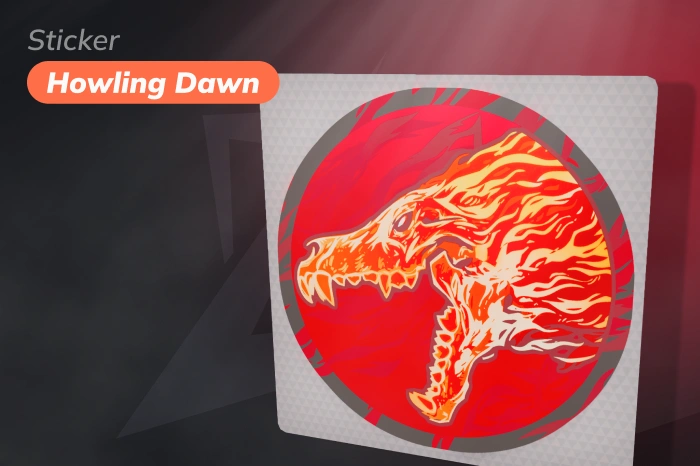
Beloved stickers like Crown (Foil), Flammable (Foil), Headhunter (Foil), but also rare and discontinued stickers like the Harp of War (Holo), the King on the Field, Winged Defuser and the Howling Dawn. These often create a higher demand, especially if added to fitting/matching guns.

Katowice 2014 ~15 – 50%+

The most valuable applied stickers in CS2. iBUYPOWER Holo, Titan Holo, and Reason Holo on popular (new) skins can exceed 50% SP. The normal Katowice 2014 Stickers can go from 15-30%. This also depends on how many Stickers are applied to the skin, and if they are applied on a new skin or an old one like an .

Scraped Stickers ~0-?% Lower Multiplier

Scraped stickers lose value proportionally to wear. Lightly scraped retains 60-80% SP, heavily scraped may add near-zero value, but these are often a Niche item for collectors, who might give you some nice overpay for them. 

Here is an equation which a lot of CS players use to calculate sticker value and overpay:

Final Skin Price = Base Skin Price + (Total Sticker Value × Sticker %).

Keep in mind that not everyone wants to overpay for stickers. If it is a Kato 2014, that is something totally different, but not every 10-cent sticker needs or deserves overpay. Especially because a lot of players will scrape cheap stickers to apply their own or keep the weaponskin clean. This also changes with the sticker position; back in CS:GO, you could only apply a sticker to one of four predestined positions: there was a “best position” and “worst position” for each gun, drastically moving the sticker overpay premium up or down.

THIS IS A RULE OF THUMB! Not a hard equation, which is the same for every kind of sticker. Always get your crafts and sticker crafts price-checked by multiple sources, especially by high-tier collectors or cash traders.

CS2 Skin Overpay: What Makes a Skin More Valuable?

All of the aforementioned aspects can play into the overpay you get on a certain skin. If you got a rare AK-47 Case Hardened Tier 3 pattern, that is some nice overpay. But if that skin got 4x Titan (Holo) | Katowice 2014, you are in for quite a big overpay.

Overpay often deals with very low floats, rare patterns, special and sought-after skins or nice sticker crafts. Gloves can also get a decent overpay if the “Scratch-Pattern” is not too noticeable on the knuckles or the viewmodel hands. Let us take a look at what warrants and gives you an overpay on your Counter-Strike 2 skins!

Rare Patterns (Biggest Overpay Driver)

Examples of rare patterns are: 

Blue Gems on Case Hardened skins: These have heavy blue coverage instead of the usual gold/brown. Top examples:

  • AK-47 Case Hardened #661 (god-tier blue)
  • Karambit Case Hardened #387 (the most expensive skin in the game, potentially millions!)

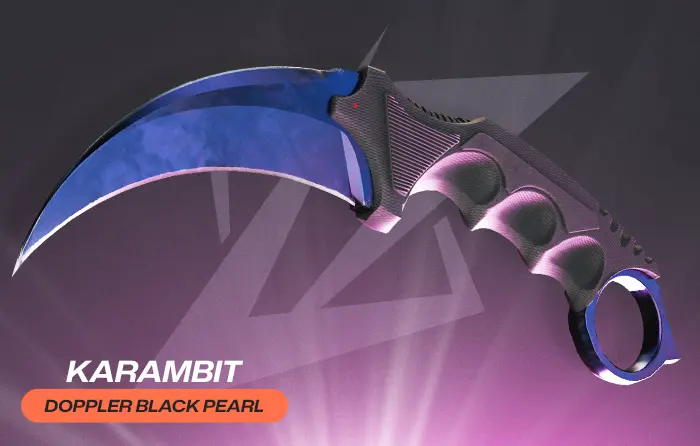
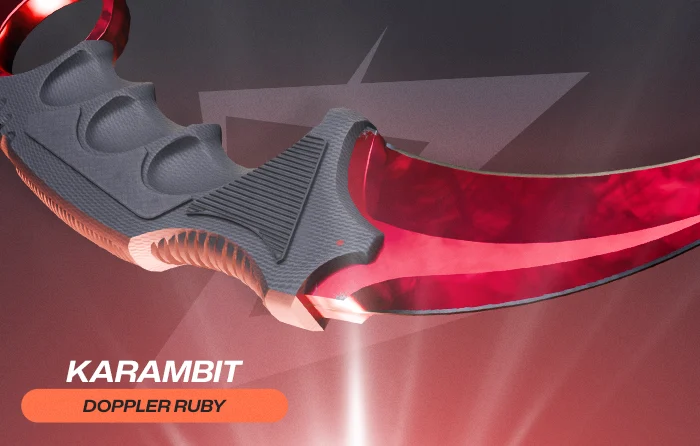
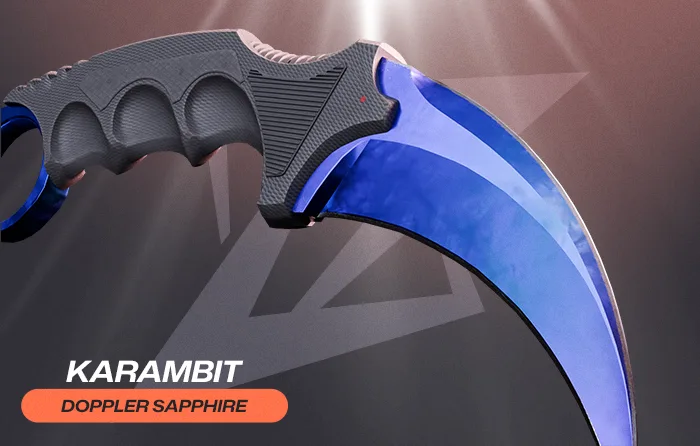
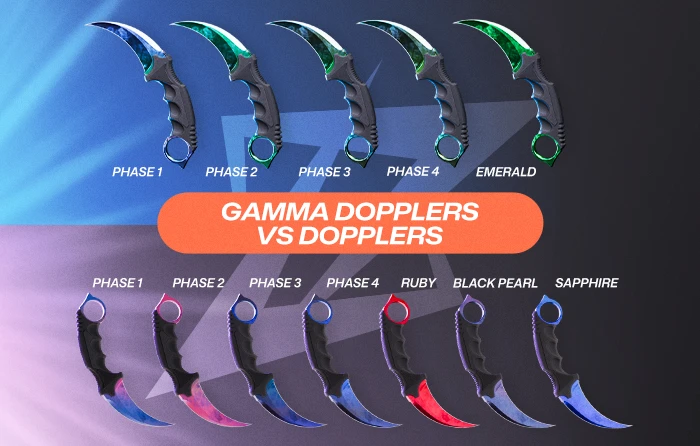
Doppler “Gems”: Sapphire (pure blue), Ruby (pure red), Black Pearl (pure black) – these are extremely rare and command huge premiums and overpay! This is what we call a “Gem” but they are essentially rare “Doppler” patterns.

Low Float Value

The lowest possible floats in a wear category (especially Factory New 0.00x) can add big overpay, especially for Trade-Up items from cases or collections with a nice rarity to them.

  • “God floats” (e.g., 0.0001 or the absolute lowest float for that skin existing) are highly sought after!
  • Stickers / Crafts

As previously mentioned, not every sticker is equal; some are more equal than others. The High-value tournament stickers (e.g., Katowice 2014 Papers/Holos, or the Krakow 2017 Golds) demand a big overpay!

  • Player autographs or rare tournament stickers.
  • Multiple expensive stickers that aren’t scraped
  • Positions matter! This makes price checking since the new sticker update extremely hard
  • Other Factors
  • Phase on Doppler knives (certain phases look better or are rarer)
    • A Phase 4 Doppler Knife is often more expensive than a Phase 2!
  • Wear tier transitions (e.g., a very clean Minimal Wear that looks Factory New).
  • Combination of all of the above (low float + rare pattern + good stickers = massive overpay). But also the Popularity/hype of the Weaponskin and Stickers: Skins/Crafts that look good or have cultural impact will always get you some overpay!

All of these factors are why the CS2 economy and skins are so detailed. To figure out the exact overpay a rare item would get, it is best to ask Traders and Collectors for a price check. But always ask multiple people and do not instantly sell your skin for the highest offer.

If it is too good to be true, it most likely is. Do not get scammed!

We also suggest cross-referencing your item/float, if applicable, with multiple marketplaces to get a rough estimate of the value. Often, the lowest listings are for the overpay you are looking for, and we suggest taking the average of the next three listings from multiple sites. And if you sell for a few bucks less, that is also fine. Always keep in mind the float, stickers, sticker positions and the rarity and liquidity of your item.

How to Check the Price/Overpay of a CS2 Skin?

Buying, selling, or simply understanding the value of a CS2 skin is not always as simple as looking at one number. While some skins have clear market prices due to high trading volume, others can become much harder to evaluate because of factors like float value, pattern rarity, stickers, and current demand. In this part of our guide, we will explain your CS2 skin value to you, what makes a skin valuable and how you can price your Counter-Strike 2 skins. But what affects CS2 skin prices?

A good valuation process is not about finding a single “correct” price instantly. Instead, it is about comparing relevant information and understanding why a skin may be worth more or less than a similar item. This is why the market and price checks for skins are important. We will tell you how and what gets overpay in CS2 and how to value your Counter-Strike 2 skins.

Whether you are checking a regular rifle skin, a rare pattern-based item, or a high-tier sticker craft, the same principle applies: the more unique the skin, the more factors need to be considered. But as stated, unique does not always mean better and more expensive.

The Basics of Skin Price Checking

The first step in valuing any skin is identifying what type of item you are looking at.

Some skins are considered liquid items. These are popular skins that are traded frequently and usually have relatively stable prices. Examples include widely used skins such as an AK-47 | RedlineAWP | Asiimov, or popular glove models.

For these items, valuation is usually based on:

  • Recent sales data (we suggest an average of the last 3-5 sales)
  • Current marketplace listings (lowest listing, for pattern-based skins, their pattern ID)
  • Average cash-market prices (actual value the skin holds)
  • Supply and demand (How liquid is it? How often does the skin sell?)
  • Condition and float value

Platforms such as Skin.Place provides examples of actively traded skins where buyers and sellers can compare similar items and understand current market conditions.

The goal is not to copy one listing price. A single expensive listing does not always represent the true market value. Instead, look for patterns across multiple comparable sales and listings.

How to Compare CS2 Skins and Their Value?

The easiest way to understand valuation is by comparing almost identical items.

For example, imagine an:

AK-47 | Redline (Field-Tested)

with the following float values:

  • Float 0.16
  • Float 0.25
  • Float 0.35
AK-47 Redline with Floats

All three skins may have the same exterior condition, but the lower float version could be slightly more desirable because it appears cleaner in-game.

However, the difference is not always significant.

A float value matters most when it creates a visible difference or when collectors specifically care about the number.

For example:

  • A Factory New skin with an extremely low float, such as 0.001, may attract additional interest because it is close to a “perfect” condition, especially as “Trade-up” material.
  • A Field-Tested skin with a float of 0.16 compared to 0.22 may look almost identical and may not justify a large price increase.

A common mistake is assuming every lower float automatically means a higher price. In reality, float only creates meaningful overpay when buyers value the difference.

How to Check CS2 Skin Value? Step-by-Step

A reliable valuation process can be broken down into several steps. Here is how to price your CS2 skins and how to understand their value and factors which play into overpay and their real cash value. Keep this guide on hand if you are trying to buy or sell skins.

1. Identify the Exact Item

Start by checking:

  • Skin name
  • Weapon
  • Exterior condition (FN – BS)
  • Float value (Near the top/end of the FV for the next condition?)
  • Pattern index (Only matters on Pattern-Based skins where the look changes)
  • Stickers or special features (StatTrak, Charms…)

Two skins with the same name can have completely different values depending on these details.

2. Check Comparable Listings

Look for skins that match as closely as possible.

The best comparisons usually have:

  • The same skin
  • Similar wear level
  • Similar float range (Important for Gloves and Good Floats)
  • Similar additional features

For liquid skins, finding comparable examples is usually straightforward.

For example, if you are valuing a pair of gloves listed on Skin.Place, you would compare the same glove model and exterior condition rather than comparing it with a different glove type, even if they would have the same finish. The glove type is just as important as the knife type is! Each item has to be checked with the same item type, class and finish. For skins with rare patterns also the same pattern!

3. Consider Recent Sales Data

Listings show what sellers are asking, but recent sales provide a better indication of what buyers are actually willing to pay.

A realistic valuation may look like this:

  • Similar skins recently sold around $30
  • Current listings range from $25 to $40
  • The evaluated skin has a cleaner float than average

In this situation, a slightly higher valuation may make sense. However, if the only difference is a small float improvement that is not visible, the price increase may be limited.

4. Adjust for Special Features

After finding the base price, additional features should be evaluated separately.

This is where valuation becomes more complex.

Example 1: Standard Liquid Skin

Consider a popular, liquid skin such as our earlier example:

AK-47 | Redline (Field-Tested)

AK-47 Redline (Field-Tested)

Assume the average market price for this skin is around $28. The AK-47 | Redline exists only in MW, FT, WW, and BS, making a good FT float often overpay, alongside its iconic status and being a well-loved (and liquid) skin for years.

Now compare three versions:

Version A

  • Float: 0.16
  • Extremely clean for the condition
  • Popular among collectors, float overpay
AK-47 Redline (Field-Tested) - Float 0.16

Estimated skin value: Often overpay floating around $100.

Version B

  • Float: 0.25
  • Cleaner appearance
  • Same skin and condition, worse float
AK-47 Redline (Field-Tested) - Float 0.25

Estimated skin value: slightly above average if buyers value the cleaner look; can be a bit harder to sell if you want to overpay, can reach up to $45.

Version C

  • Float: 0.35
  • No stickers
  • Bad for FT float- no overpay
AK-47 Redline (Field-Tested) - Float 0.35

Estimated skin value: Normal market price, around $28-30.

The important lesson is that float is a supporting factor, not automatically a price multiplier.

Example 2: Pattern-Based Skin

Pattern skins, and skins with rare patterns such as the Case Hardeneds or Doppler Gems require a different approach.

M9 Bayonet | Doppler Sapphire

M9 Bayonet Doppler Sapphire

Doppler gems are some of the most well-known examples of Pattern-Based skins. These are highly collectable, rare and expensive. Here is what you should know about them and their overpay. 

Although a Minimal Wear condition is rarer than the Factory New float for Doppler Knives, the Minimal Wear one is actually less expensive and less in demand. A Doppler Knife has a Float Value of 0.00 – 0.08, which makes getting Minimal Wear, which ranges from 0.07-0.15, very rare! 

However, pattern valuation is not based on an official price table.

Factors include:

  • How much of the valuable pattern appears (Blue Gems)
  • Which side of the weapon is most visible (Blue Gems)
  • Collector demand (Blue Gems and Doppler Gems)
  • Comparable sales of similar patterns

Version A

  • Float: 0.03
  • Doppler Gem Sapphire
  • Factory New more common for Dopplers
M9 Bayonet Doppler Sapphire - Float 0.03

Estimated skin value: Very rare and expensive, $4,000.

Version B

  • Float: 0.09
  • Doppler Gem Sapphire
  • Rare Minimal Wear float
M9 Bayonet Doppler Sapphire - Float 0.09

Estimated skin value: Rarer, but cheaper than its Factory New Counterpart, costing $3,500.

Version C

  • Float: 0.05
  • Normal Doppler Knife
M9 Bayonet Doppler Sapphire - Float 0.05

Estimated skin value: Normal market price for Doppler Knives, $850.

Example 3: Gloves

While Glove Skins are also skins, they follow a different pricing method than the normal items.

Sport Gloves | Vice (Field-Tested)

Sport Gloves Vice

Gloves, like skins, also have a “scratch pattern”. For gloves, these are extremely important as they can give you either clean or scratched and destroyed visible gloves. Many players go for “clean knuckles” as that looks better, but this also means that players are more willing to overpay here, even if the float is a bit worse; if the knuckles are good, that can be a decent little overpay.

Gloves can also have rare patterns; be extra careful when shopping for gloves.

Version A

  • Float: 0.03
  • Better overall Float (FT)
  • Worse Knuckles than B
Sport Gloves Vice - Float 0.03

Estimated skin value: Because of a better Float (more sought after) costs around $450

Version B

  • Float: 0.40
  • Worse Float (WW)
  • Better Knuckles
Sport Gloves Vice - Float 0.40

Estimated skin value: $400 even though the overall look is a tiny bit better than Example A.

Example 4: Sticker Craft

Sticker crafts are among the most difficult items to value because the price depends on several separate elements. But how do stickers affect CS2 skin value? And how do we calculate sticker value on our Counter-Strike skins?

Consider a:

AK-47 | Redline with four Katowice 2014 stickers

AK-47 Redline with four Katowice 2014 stickers

The base skin might have a clear market value, but the craft introduces additional questions:

  • Which stickers are applied?
  • Are they placed in desirable positions?
  • Are they scratched?
  • How popular is the sticker combination?
  • How much does the community value the design?

A simple calculation like:

“Sticker price × percentage added to skin price”

Usually does not work.

A craft with expensive stickers does not automatically receive the full sticker value. Buyers are usually paying for the overall combination, rarity, and visual appeal. If you have an AK-47 | Redline and 4x iBUYPOWER Holos, that will be more expensive than stickers, which do not match the gun and its visual appeal.

For example:

  • A clean four-sticker Katowice 2014 craft with popular placement may attract collectors.
  • The same stickers on a less desirable skin or with poor placement may receive much less interest.

Sticker crafts are often valued through comparable examples and collector demand rather than a fixed formula.

Common Skin Valuation Mistakes

Many pricing mistakes happen because sellers focus on one factor instead of the whole item.

Mistake 1: Using the Most Expensive Listing as the basis

A high listing price does not always mean the skin is worth that amount! Some skins, especially rare or niche patterns/items can sit on marketplaces for months or even years. Some listings are intentionally placed above market value and may not represent realistic buyer interest.

Mistake 2: Overvaluing Float

A lower float can help, but it does not always create significant overpay!

A float difference matters when:

  • It creates a visible improvement
  • It reaches an important collector threshold (Good FT float/scratch free knuckles on Gloves)
  • Buyers specifically search for that range (eg. very high Float AWP | Asiimov, “Blackiimov”)

It matters less when:

  • The skin looks almost identical (AK-47 | The Empress: MW $96 – BS $90) 
  • The item is too common or cheap in general
  • There is little collector demand

Mistake 3: Treating Every Sticker as Added Value

Sticker value depends on the craft, not only the sticker itself. A rare sticker placed on an unpopular position, or a scraped one, may not create the same premium as a well-designed collector craft with a 4x.

Mistake 4: Ignoring Market Demand and Trends

A skin may be rare but still difficult to sell if few buyers are interested. Rarity and value are connected, but they are not the same thing!

A Practical Way to Think About Skin Value

A simple framework is:

Base skin value + condition adjustment + special feature premium + market demand

For regular skins, the base price usually does most of the work.

For rare items, additional factors become more important:

  • Float (Low, Medium, Bad?)
  • Pattern (only for Pattern-Based skins)
  • Stickers (Different sticker demand/percentage)
  • Collector interest (Rarity, Demand, Status)
  • Recent comparable sales

Conclusion

In the fast-moving CS2 skin world, learning what causes overpay can really help you trade smarter and avoid getting ripped off.

Thank you for reading this Skin 101 Guide! We hope you learned a lot and now understand the basics about Counter-Strike 2 skins, floats, patterns, overpay, and everything else you need to get started or refresh your memory in CS2 trading.

Keep it simple, and inspect every skin carefully. With these kinds of items, often a good flip can be made, but if you are unsure, do not buy the skin. Just because it has rare stickers or a pattern does not mean you can make a profit with it! Good luck making some fine deals!

AK-47 Case Hardened Blue Gem Patterns

Many Counter-Strike players can agree that the AK-47 is hands-down the most iconic weapon in the game, so it’s vital for every serious player to have a good skin for it. There are a bunch of different AK-47 skins, but the AK-47 Case Hardened is considered as one of the most legendary ones. 

Its prestige mainly comes from the Blue Gem patterns, which can skyrocket its price by over 100 times, especially the iconic number one pattern – #661. 

In this AK-47 Blue Gem guide, we’ll tell you everything you need to know, from what it is and which patterns are objectively best. 

What Is the AK-47 Case Hardened?

The AK-47 Case Hardened is a Counter-Strike weapon skin released all the way back in 2013. It is one of the first skins released in the game, which is what partly makes it such a legendary skin. 

The AK-47 Case Hardened can only be found in the original CS:GO Weapon Case, which is one of the most expensive weapon cases in the game. So, the starting price for a regular Case Hardened AK-47 is already pretty high. 

Like every other Case Hardened skin in the game, this AK-47 is mainly made up of three colors, which include blue, gold, and purple. However, the Case Hardened AK-47 has 1,000 different patterns, with each altering its look. 

These patterns play a very important role in the AK-47 Case Hardened skin’s appearance and price point, so it’s very important to understand what that means and how it works before buying one. That’s exactly what we’ll talk about in this Case Hardened AK-47 guide, so make sure to stick around!

What Is an AK-47 Case Hardened Blue Gem?

Earlier, we mentioned that there are 1,000 different AK-47 Case Hardened patterns. The key takeaway here is that some patterns are considered rarer than others. 

Your typical Case Hardened AK-47 will feature a combination of blue, gold, and purple colors. However, there are some very rare patterns that cause the skin to display abnormal amounts of blue colors instead of a balanced mix of all three. Since these patterns populate the skin with blue, we call them CS2 (CS:GO) Blue Gem Patterns

To determine whether an AK-47 Case Hardened pattern is a Blue Gem one, we’re mainly looking at the amount of blue coverage on its playside. If there’s way more blue on the skin compared to gold and purple, there’s a good chance you’re looking at a Blue Gem Case hardened AK-47 pattern. 

Blue Gem patterns are not just rare – the community also believes they look much better than the regular, bland patterns. That’s exactly why collectors are always ready to pay huge premiums for these bad boys. 

How AK-47 Case Hardened Patterns Work?

We’ve gotten an introduction to what AK-47 Case Hardened patterns are, but to fully understand the concept, you also need to know how they work. 

First, you need to know that every Counter-Strike skin is assigned to a pattern index right after you unbox it from a weapon case or receive it from a drop. This pattern index is a random number between 0 to 999, so we’re looking at 1,000 different patterns. This pattern cannot change – once it’s assigned to a skin, it will stay that way forever. 

Now, the Case Hardened skin is a pattern-based skin. There is this huge canvas where all of its blue, gold, and purple textures are painted – just like a map. So, every single pattern index is just the game dropping the AK-47 on different parts of that canvas. Then, the skin is going to absorb those colors – and that’s how the skin will end up as. 

Since the AK-47 is being plopped onto different spots on the canvas, you’ll quickly notice that AK-47 Case Hardened skins tend to look different from each other – no pattern looks the same. In rare cases, the AK-47 ends up on a blue-populated area, which is exactly how a pattern ends up as a Blue Gem. 

It’s worth noting that skins with the same pattern index will always look the same. For example, your Case Hardened AK-47 skin with a pattern number of #661 will always look exactly the same as another guy’s #661 pattern. 

How AK-47 Blue Gem Patterns Are Ranked

There are close to 150 AK-47 Case Hardened pattern seeds that qualify as a Blue Gem pattern. However, not all of them are ranked equally. 

To differentiate the Blue Gem patterns, the community has come up with a ranking system, dividing all the AK-47 Blue Gem patterns into four tiers – Tier 1 being the best of the best, while Tier 4 patterns are mediocre. 

There are several factors that affect an AK-47 Blue Gem’s pattern ranking, and some of the main ones include:

  • Playside blue percentage
  • Receiver blue coverage
  • Symmetry
  • Minimal gold coverage
  • Backside appearance

But don’t worry – you don’t need to rank any AK-47 Case Hardened Blue Gems yourself, as the community has already done it for you. We’re going to take a look at all the Blue Gem AK-47 patterns and which ranking tiers they fall under. 

AK-47 Case Hardened Blue Gem Pattern Tier List

So, now we know what AK-47 Blue Gem patterns are, how they work, and how they are ranked. Let’s actually take a look at the exact pattern seeds that qualify for a Blue Gem pattern.

There are 146 AK-47 Case Hardened patterns that are accepted as Blue Gem patterns. Like we touched on earlier, they are also ranked in tiers, and you can see the complete list below:

Blue Gem TierPattern Seeds
Tier 1661, 151, 955, 321, 387, 670, 179
Tier 2592, 4, 905, 13, 168, 429
Tier 3555, 442, 978, 139, 828, 969, 750, 695, 103, 112, 733, 844, 228, 868, 434, 698, 74, 996, 760, 375, 708, 823, 690, 791, 278, 917, 463, 711, 849, 92, 82, 450, 512, 310, 713, 11, 721, 236, 172, 950, 147, 782, 322, 363, 189, 961, 497, 430, 887, 426, 862
Tier 4770, 648, 28, 575, 73, 798, 557, 627, 532, 541, 935, 453, 479, 872, 522, 525, 664, 622, 494, 344, 965, 775, 847, 209, 689, 306, 803, 169, 577, 381, 878, 2, 888, 526, 879, 126, 605, 468, 269, 891, 481, 985, 715, 248, 456, 420, 681, 32, 397, 493, 788, 256, 470, 418, 927, 182, 178, 685, 407, 507, 65, 200, 694, 922, 795, 809, 296, 842, 194, 431, 341, 447, 130, 205, 428, 230, 458, 1000, 242, 34, 325, 724

Best AK-47 Case Hardened Blue Gem Patterns

The table above tells you every AK-47 Case Hardened Blue Gem pattern, but let’s actually dive into the best ones under each tier:

#661 Pattern — #1 Blue Gem 

AK-47 Case Hardened Blue Gem #661 Pattern

There’s no question about it: the number one AK-47 Blue Gem pattern is undoubtedly pattern number #661, which is also known as the “Scar Pattern.”

The AK-47 Blue Gem pattern #661 has the highest blue coverage at the top of the skin, with a whopping 76.13%. This pattern also has a visible golden scar near the top, surrounded by an almost completely blue receiver. The Case Hardened AK-47 does not get any better than this. 

This AK-47 pattern in StatTrak Factory New condition sold for over a million dollars, making it one of the most expensive CS2 skins ever sold. The Non-StatTrak Factory New ones are also valued at $150,000 to over $200,000, so you’re really looking at life-changing money if you manage to unbox one. 

#670 Pattern — Tier 1 

AK-47 Case Hardened Blue Gem #670 Pattern

It’s safe to assume that pattern #661 is inaccessible for most people due to its absurd price range. But, if you’re looking for a Tier 1 Blue Gem AK-47 that’s a close second, we recommend checking out pattern #670.

Pattern #670 still has a very high blue percentage, sitting at around 70.96%. You’ll see a visible golden scar on the rear part at the top rear, which is this pattern’s only downside. A cool trick is to cover that scar using a sticker. 

It’s also worth noting that pattern #670 has a very golden barrel, which could be something collectors like. 

#955 Pattern — Tier 1

AK-47 Case Hardened Blue Gem #955 Pattern

Similar to all other Tier 1 AK-47 Case Hardened Blue Gem patterns, pattern #955 also has a very high percentage of blue at 72.86%. It has a very clean top side, which is almost completely blue – that’s primarily what collectors are looking for. 

Pattern #905 is also unique, as it has an almost completely golden barrel, which is something no other Tier 1 Blue Gem Case hardened AK-47 has. It’s also far more affordable than pattern #661, but we’re still looking at five figures in Factory New condition. 

#905 Pattern — Tier 2

AK-47 Case Hardened Blue Gem #905 Pattern

Moving down a tier, we’ll take a look at some of the best Tier 2 patterns starting with number #905. The blue percentage sees a very noticeable drop from Tier 1 patterns, as #905 is 58.92% blue.

However, this AK-47 Blue Gem pattern still has a really nice blue top, covering almost the entire area. You will also see lots of blue on the gun barrel, which is definitely something that attracts Blue Gem collectors. 

All in all, pattern #905 is easily one of the best Tier 2 AK-47 Blue Gem patterns out there in terms of blue percentage and placement. 

Pattern #316 — Tier 3

AK-47 Case Hardened Blue Gem #316 Pattern

Pattern #316 is another Tier 3 AK-47 Case Hardened Blue Gem worth checking out. While it doesn’t have the same level of blue coverage as the higher-ranked patterns, it still offers enough blue on the playside to make it appealing to collectors looking for a more affordable Blue Gem.

As a Tier 3 pattern, #316 is a good middle-ground option for buyers who want the distinctive Blue Gem look without paying the premium associated with Tier 1 and Tier 2 patterns. Its overall appearance and pattern placement make it a solid choice for collectors on a mid-range budget.

#363 Pattern — Tier 3 

AK-47 Case Hardened Blue Gem #363 Pattern

The Tier 3 category of AK-47 Case Hardened Blue Gems is when the blue percentage starts falling below the halfway point. 

Pattern #363’s blue percentage is sitting at 42.69%. It has solid blue coverage at the top of the weapon, but its rear features more golden hues than you’d typically want. 

However, the AK-47 Blue Gem pattern #363’s unique feature is its golden magazine. It has a very low blue percentage on its magazine at only 1.99%, so you’ll see almost completely gold on the mag except for a single blue dot. 

#750 Pattern — Tier 3

AK-47 Case Hardened Blue Gem #750 Pattern

The second Tier 3 Case Hardened AK-47 pattern we’ll feature is number #750, which is 51.5% blue on its playside, and that’s still very solid. 

Most of the weapon’s top half is blue until you reach the rear, which is almost completely covered in gold. The barrel of the AK-47 Blue Gem pattern #750 is also fully gold, so if you’re into golden barrels, this specific pattern is definitely one to target. 

#770 Pattern — Tier 4

AK-47 Case Hardened Blue Gem #770 Pattern

Pattern #770 is a Tier 4 pattern worth checking out, and it is 41.45% blue on its playside. However, it has strong blue coverage at the top, making it a very decent Blue Gem option, especially in this tier. 

The prices for the AK-47 Case Hardened pattern #770 falls below the $1,000 mark, which is way more affordable than the other patterns we discussed earlier. 

Pattern #819 — Tier 4

AK-47 Case Hardened Blue Gem #819 Pattern

Pattern #819 falls into the Tier 4 category of AK-47 Case Hardened Blue Gem patterns. Like other patterns in this tier, it offers a more budget-friendly way to get into the Blue Gem market while still retaining the unique blue, gold, and purple finish that makes Case Hardened skins so popular.

It may not have the same collector demand as patterns from the higher tiers, but #819 can still be an attractive option for players who prioritize the Blue Gem appearance over maximum rarity or investment potential.

Pattern #129 — Tier 4

AK-47 Case Hardened Blue Gem #129 Pattern

Pattern #129 is another Tier 4 AK-47 Case Hardened Blue Gem pattern that is worth considering for buyers with a smaller budget. While Tier 4 patterns generally command lower premiums than the top-ranked Blue Gems, they can still provide plenty of visual appeal.

For collectors who want a Case Hardened AK-47 with noticeable Blue Gem characteristics without spending the huge sums associated with patterns like #661, #129 offers another affordable option to consider.

Estimated AK-47 Case Hardened Blue Gem Prices by Tier

If you’re still deciding what Blue Gem AK-47 tier to grab, here’s a table that might help you out:

TierExample Pattern SeedsApproximate Price RangePremium vs Regular AKCollector DemandTypical Buyer
Tier 0 (#661 only)#661 (Scar Pattern)$150,000 – $1,000,000PremiumWanted, but priced out fastTrading whales with high net worth
Tier 1#670, #151$3,000 – $35,000Premium Wanted, but priced out fastHigh net-worth collectors
Tier 2#905, #592$1,000 – $15,000Premium High demandCollectors who like hitting the sweet spot
Tier 3#363, #750$800 – $3,000RegularNiche demandCollectors with mid-range budgets
Tier 4#770, #648$400 – $1,200RegularLow demandCasual buyers

Does Float Matter on an AK-47 Blue Gem?

Yes, like every other skin in the game, float values do matter on the AK-47 Case Hardened Blue Gem skin, because collectors naturally want the best of the best.

However, unlike most other CS2 skins, the AK-47 Case Hardened skin doesn’t really get torn as it goes up in float values. Instead, the difference comes down to its shine and rust – high-float AK-47 Blue Gems will look a little darker compared to low-float ones. 

So, hardcore collectors will only want their Blue Gem AK-47 skins in either Factory New or Minimal Wear condition. Meanwhile, it’ll be harder to sell CS2 (CS:GO) skins, even Case Hardened patterns, that are in Field-Tested, Well-Worn – or even worse – Battle-Scarred. 

Still, though float values are important, it’s worth noting they do not change an AK-47 Case Hardened skin’s pattern. Pattern seeds will still outweigh float values in most cases. 

How Rare Is an AK-47 Case Hardened Blue Gem?

The Blue Gem Case Hardened AK-47 skin is hands-down one of the rarest ones in the game. 

First of all, it resides in one of the most expensive CS2 cases, which is the original CS:GO Weapon Case. These cases are scarce and will cost you $100 each to open already, which makes people scared to unbox them. 

The chances of unboxing an AK-47 Case Hardened from a case is roughly 1.60%, as you have a 3.20% chance to unbox a Classified skin, and there are two of them in the CS:GO Weapon Case. 

Once you unbox one, you’ll also have to land one of the rare Blue Gem pattern seeds. Since there are only seven Tier 1 Blue Gem patterns, the odds of getting one is 7 in 1,000, on top of the 1.30% chance of unboxing the skin in the first place. 

So, you can imagine how rare it is to get the AK-47 Blue Gem pattern #661, and why collectors are willing to spend hundreds of thousands of dollars on them. The supply for them is just extremely limited, while demand is high.

How to Check an AK-47 Blue Gem Pattern

From what we’ve discussed above, we now understand how important pattern seeds are for the AK-47 Case Hardened skin. So, it’s important that you know how to check AK-47 Case Hardened patterns yourself.

Fortunately, checking an AK-47 Blue Gem pattern seed is pretty easy.

Just follow these steps below:

  1. Grab the skin’s inspect link, then inspect it in the CS2 client.
  2. On the inspect menu, look for the “i” icon at the bottom. Then, hover your mouse over it. 
  3. You should see additional information pop up. Here, look for “Pattern Index.”
  4. The game will display a number between 0 to 999. That number is the pattern seed. 

While you’re at it, it’s also worth taking a look at the skin’s float value. You can always compare that number to a float database to determine its condition. 

So, if you’re ever hunting for a specific AK-47 skin, make sure to follow these steps and verify whether it is actually an AK-47 Blue Gem pattern. 

Where to Buy or Sell an AK-47 Case Hardened Blue Gem

If you’ve decided that you want to buy one for yourself, the next step is figuring out where to buy (CS2) CS:GO skins

Since we’re working with rare patterns here, we firmly recommend using a third-party marketplace website as opposed to the Steam Market. These trading platforms have built-in plugins that’ll display the AK-47 Case Hardened pattern seed and show you what it looks like.

When you’re planning to buy a Blue Gem Case hardened AK-47 from one of these third-party websites, you should only use trusted marketplace websites, like Skin.Place, for example. Using reputable sites will ensure you don’t get scammed and end up with nothing. 

Of course, you should always do your due diligence and double-check the pattern seeds and float values before you close a deal. You should also compare recent sales so you know you’re not getting swindled. 

If you’re doing a cash trade, make sure you’re using protection like using a trusted middleman. You’ll be working with up to thousands of dollars, so always tread carefully. 

Is an AK Case Hardened Blue Gem a Good Investment?

Yes, the AK-47 Case Hardened Blue Gem can be a good investment, but it really depends.

It’s worth noting that the AK-47 Case Hardened is a very scarce skin since it’s coming from a rare case, so the supply is very limited. The value of these bad boys is going to continue appreciating and the demand doesn’t seem to be dropping.

However, low-tier Blue Gem patterns, like Tier 3 and Tier 4 ones, might not be a strong long-term investment due to low demand. If you want something reliable in the long run, we recommend looking at Tier 2 and Tier 1 Blue Gems especially. 

Just remember that the CS2 skin market can be volatile at times, and that no investment is guaranteed. 

Conclusion 

So, the AK-47 Case Hardened Blue Gem is still one of the most sought-after CS2 skins, even though it’s been in the game for more than a decade. The main reason is its rare Blue Gem patterns, which can multiply the skin’s value tenfold. 

The number one pattern – pattern #661 – is the ultimate collector’s item, and is a skin that only belongs to the most expensive CS2 inventories for its absurd price ranges. However, there are many other AK-47 Case Hardened Blue Gem patterns that are more affordable and offer solid collector appeal and investment potential. 

Just remember to always verify pattern seeds and only buy these expensive skins on trusted marketplaces. 

M9 Bayonet Case Hardened Blue Gem Patterns

The M9 Bayonet is hands-down one of the most iconic knives in Counter-Strike 2, as it’s been around since skins were first released in the game. Though there are a handful of M9 Bayonet skins out there, one of them definitely stands out: the Case Hardened. 

The M9 Bayonet Case Hardened is unique in the sense that it has 1,000 different patterns that alter its appearance, and the rarest among them are called Blue Gems. Since only so few of these patterns end up as Blue Gems, these bad boys can easily fetch for extremely high prices. 

In this M9 Bayonet Blue Gem guide, we’ll tell you everything you need to know, from what it is and the patterns to keep an eye on. 

What Is the M9 Bayonet Case Hardened?

The M9 Bayonet Case Hardened is a Counter-Strike 2 knife skin released all the way back in August 2013. You can find it in eleven different original Counter-Strike cases, so there are a lot of case options if you’re trying to go for it.

Like every other Case Hardened knife skin, the Case Hardened M9 Bayonet is primarily made up of three colors, which include blue, gold, and purple. However, the Case Hardened was the first notable pattern-based skin, which means the knife can look different from each other based on pattern indexes.

The M9 Case Hardened has 1,000 different patterns that can change how it looks. These patterns play a major role in the knife’s appearance and desirability, so it’s very important to know how it works and what the best patterns are before you buy one. We’re going to explain this in detail throughout this M9 Bayonet Case Hardened guide, so keep reading. 

What Is an M9 Bayonet Blue Gem?

As we mentioned earlier, there are 1,000 possible M9 Bayonet Case Hardened patterns. Now, what you need to know is that some of these patterns become much rarer than others.

Normally, the M9 Bayonet Case Hardened features the three aforementioned colors. However, some patterns make the knife display an abnormal amount of blue colors – we call these CS2 (CS:GO) Blue Gem patterns

To identify a Blue Gem M9 Bayonet, you’re mainly looking at the knife’s playside – if it’s mostly covered in blue colors, then that’s likely a Blue Gem pattern. However, not every blue-looking Case Hardened is considered a Blue Gem – the blue placements also matter a lot. 

Of course, not all M9 Case Hardened knives end up as a Blue Gem – that’s why it’s called a rare pattern, after all. Only a very small percentage of the 1,000 possible patterns qualify as a Blue Gem, so you should always keep an eye on these patterns. 

Why Are M9 Bayonet Blue Gems So Rare?

Before you think of unboxing a M9 Bayonet Blue Gem, you’ll have to unbox a knife first – we all know the chances of these are pretty low. 

And once you unbox a Case Hardened M9 Bayonet, getting a Blue Gem is also difficult because there are only around 150 out of 1,000 patterns that qualify as one. So, you essentially have a 15% chance that your M9 Bayonet ends up as a Blue Gem, further decreasing the odds. 

It’s also worth noting that the M9 Bayonet has one of the largest blades among Counter-Strike knives, meaning there’s a lot of surface area to cover. As a result, it’s actually much harder to get a Blue Gem M9 Bayonet with a very high blue percentage compared to other CS2 (CS:GO) knife types

How Case Hardened M9 Bayonet Pattern Seeds Work

So, we know that patterns exist, and that some are better than others. But, how do these patterns actually work? Let’s break it down.

Every Counter-Strike skin is assigned to a random pattern seed, which is a number between 0 and 999. This number is randomly generated, and it is locked to your skin forever – it cannot be changed.

The Case Hardened skin family has a huge canvas, where all of its textures are painted – so, there are blue, gold, and purple colors all around. Now, imagine this: every pattern seed is just the game placing the M9 Bayonet knife on random locations on that canvas.

Since the knife is being placed on different spots, you’ll notice that M9 Bayonet Case Hardened patterns do not look identical. In rare cases, the M9 Bayonet is placed on top of a blue-populated area – this is how a Blue Gem comes into fruition. Keep in mind that we’re mainly looking at the playside, not the backside.

So, a Case Hardened M9 Bayonet with a pattern index of #601 will look different from one with a pattern index of #602. However, a pattern #601 will always look exactly the same to another #601. 

It’s also worth noting that pattern seeds only determine appearance, while float values are another thing that only affects wear. Keep that in mind when you want to buy (CS2) CS:GO skins

All M9 Bayonet Case Hardened Blue Gem Patterns: Ranked

If the concept of the M9 Blue Gem is clear to you now, let’s actually look at the Blue Gem patterns. 

There are 148 M9 Case Hardened pattern seeds that are considered as Blue Gems. These patterns are grouped into a tiering system, with Tier 1 patterns being the best, while Tier 4 ones are mediocre. 

Blue Gem TierPattern Seeds
Tier 1 Blue Gem58, 150, 239, 349, 403, 406, 417, 503, 523, 585, 601, 634, 675, 897
Tier 2 Blue Gem21, 91, 107, 117, 166, 167, 202, 224, 253, 269, 281, 288, 336, 346, 354, 355, 366, 430, 449, 517, 550, 613, 628, 715, 793, 813, 867, 880, 946
Tier 3 Blue Gem4, 41, 59, 88, 108, 124, 141, 157, 173, 204, 210, 227, 229, 243, 249, 286, 293, 295, 298, 319, 345, 356, 372, 393, 476, 490, 525, 529, 533, 546, 553, 598, 610, 790, 821, 837, 859, 866, 887, 908, 910, 915, 933, 959
Tier 4 Blue Gem2, 63, 64, 97, 103, 113, 136, 138, 156, 162, 176, 177, 179, 209, 246, 251, 292, 308, 351, 353, 369, 401, 413, 445, 473, 475, 496, 506, 507, 516, 518, 524, 526, 556, 564, 573, 619, 632, 651, 674, 681, 698, 706, 735, 759, 764, 779, 783, 794, 808, 811, 835, 869, 871, 902, 904, 916, 941, 963, 968, 989

Best M9 Bayonet Blue Gem Patterns

The table we provided above includes all M9 Bayonet Blue Gem patterns in the game, but not all of them are made equal. Let’s go over the best M9 Bayonet Blue Gem patterns for each tier, so you have an idea of which ones to go for.

#601 Pattern — Tier 1

M9 Bayonet Blue Gem #601 Pattern

The absolute best M9 Bayonet Blue Gem pattern is easily number #601. This pattern’s playside is approximately 86.2% blue, which is the highest you can get. This makes pattern #601 the number one pattern.

With this pattern, the M9 Bayonet’s blade is almost completely blue – there are no golden spots on the top half of the blade, and you’ll only see small touches of gold at the very bottom. 

The backside is roughly 39.56% blue, which isn’t the highest, but collectors don’t value the backside much, so that’s completely fine. 

Since it’s the best possible M9 Bayonet Case Hardened you can get, it’s not surprising that it’s also one of the most expensive CS2 (CS:GO) knives in the entire game. 

#417 Pattern — Tier 1 

M9 Bayonet Blue Gem #417 Pattern

The next M9 Bayonet Blue Gem pattern we’ll cover is pattern #417, which is right behind pattern #601 in terms of prestige.

This Blue Gem pattern is 81.69% blue on its playside, but is inferior to pattern #601 because of its color placements. Here, you’ll see a visible golden spot near the tip of the blade, which can be a turnoff for collectors who are looking for the best of the best.

However, apart from that, almost everything else on the M9 Bayonet Blue Gem pattern #417 is completely blue. This pattern also has a strong backside that’s 56.85% blue, giving it some extra points. 

Even though they are both Tier 1 patterns, the price difference between pattern #417 and #601 is still pretty huge, with the latter being more expensive. 

#166 Pattern — Tier 2 

M9 Bayonet Blue Gem #166 Pattern

Moving down the tier ranking, we have pattern #166, which is considered one of the better Tier 2 patterns.

Pattern #166 has a blue playside percentage of 49.54%, but the best part about it is where the blue lies. Almost the entire top half of the M9 blade is covered in gorgeous blue colors, and there’s a golden tip which some collectors like. 

However, the backside doesn’t feature too much blue, and is mostly golden. 

#288 Pattern — Tier 2

M9 Bayonet Blue Gem #288 Pattern

Another solid Tier 2 M9 Bayonet Blue Gem option is pattern #288, which is 49% blue on its playside. 

Though the blade is only half blue, you can bet the blue is going to the right place. Pattern #288 features a full blue top half, including the tip. Then, the bottom half is completely golden. It really looks like a clean fifty-fifty split – just like yin and yang. 

The backside of pattern #288 is also pretty solid, with a completely blue tip. This is definitely one of the best Tier 2 M9 Bayonet Case Hardened patterns available.

#243 Pattern — Tier 3 

M9 Bayonet Blue Gem #243 Pattern

If you’re looking for a more budget-friendly alternative, Tier 3 M9 Blue Gems could be a good fit. We recommend pattern #243, which actually has a slightly higher blue percentage than the previous Tier 2 Blue Gems we mentioned earlier at 50.69%.

The blue placement on pattern #243 is exceptional – the top half of the blade is almost entirely blue except for two golden dots, which is extremely good for a Tier 3 ranking. 

The backside also has a high blue percentage at 44.83% and also has a very nice blue tip. 

#88 Pattern — Tier 3

M9 Bayonet Blue Gem #88 Pattern

Another Tier 3 recommendation is the M9 Bayonet Case Hardened pattern #88. This one’s playside is 51.02% blue, which is a pretty solid number for a Tier 3.

Pattern #88 has a completely blue tip, which is something collectors always look for. However, there is a noticeable gold section that separates the tip from the rest of the blue, which doesn’t look too appealing to most people. 

The good news is that pattern #88 has a strong backside, which is 59.21% blue. The bottom half of the backside is completely blue. 

#209 Pattern — Tier 4 

M9 Bayonet Blue Gem #209 Pattern

If you’re just starting out with collecting Blue Gems, a Tier 4 M9 Bayonet Blue Gem could be a good starting point. If that’s what you’re looking for, keep an eye on pattern #209. 

Pattern #209 has a very low blue playside percentage at only 34.99%, but all of the blue is at the top of the knife, giving it a very clean blue tip.

However, the main selling point of pattern #209 is its backside, which is 69.35% blue. If you want a Blue Gem M9 Bayonet with a decent playside and a strong backside, pattern #209 is a great choice. 

#759 Pattern — Tier 4

M9 Bayonet Blue Gem #759 Pattern

Finally, we’ll recommend pattern #759, which is also a Tier 4 Blue Gem. This pattern is 44.01% blue, which is really good for a Tier 4 Blue Gem.

On its playside, pattern #759 has a really nice blue tip, but the rest of the blue isn’t really going to the right places. The backside is really decent though, as it’s 66.58% blue with a blue tip, too. 

M9 Bayonet Knife Case Hardened Float and Wear Values

Apart from patterns, float values are another important consideration when looking for skins, and that still applies to the Case Hardened M9 Bayonet. 

Unlike most other CS2 skins, the Case Hardened skin doesn’t really show any wear or tears as you go up in float. The main difference is that it’ll start losing its shine and look more rusted.

Of course, getting a M9 Bayonet Blue Gem in Factory New condition is the primary goal for all collectors, since that’s how it’ll look best. Minimal Wear remains a solid option, too. 

However, things get dicey once you step into Field-Tested, Well-Worn, or Battle-Scarred, as your skin will look noticeably darker. 

Though float values are worth taking a look at, you should remember that it will never change the pattern index. In the context of Blue Gem M9 Bayonets, patterns are definitely a higher priority than float. 

How to Check an M9 Bayonet Blue Gem Pattern

We’ve spent the entire M9 Bayonet Blue Gem guide talking about how important patterns are, so you should also know how to check pattern seeds yourself.

The good news is that checking your M9 Case Hardened pattern seed is incredibly easy, and can even be done through the CS2 client. Here’s how:

  1. Inspect the knife in Counter-Strike 2.
  2. On the inspect screen, look for the “i” icon at the bottom. Then, hover your mouse over it.
  3. You’ll see additional information, then look for “Pattern Index.”
  4. Here, you should see a number between 0 to 999. This is the knife’s pattern index.

You can also manually take a look at the Case Hardened M9 Bayonet skin and tell if it’s a Blue Gem – just make sure you’re looking at the playside. 

After you’ve identified the pattern, you can use those digits and compare them with the table we’ve provided above. If the pattern is a Blue Gem seed, then you’ll know exactly what you’re working with. 

How to Get an M9 Bayonet Case Hardened

So, if you’ve read through this M9 Bayonet Blue Gem guide and want one for yourself, the next course of action is to buy one. 

For rare patterns like Blue Gems, we highly recommend using third-party marketplace websites instead of the Steam Market. These platforms have built-in tools that let you verify the pattern seed and see what the knife looks like.

When you’re planning to buy a M9 Blue Gem from one of these websites, make sure you’re using a trusted one like Skin.Place. Using reputable sites will ensure you don’t get scammed in any way. 

You should always do your due diligence and verify the pattern seeds and float values, and also compare prices before making your purchase. Some malicious traders may also post fake Blue Gem listings when they sell CS2 (CS:GO) skins, so you should also watch out for that. You can always inspect the knife in-game so you know exactly what you’re working with. 

Is an M9 Bayonet Blue Gem a Good Investment?

Yes, the Blue Gem M9 Bayonet can be a good investment, but it really depends on what you’re looking for.

For starters, the Case Hardened M9 Bayonet comes from old Counter-Strike cases which have skyrocketed in value, making them naturally expensive. This also means M9 Bayonet Blue Gems have become more scarce and will continue increasing in value. So, the M9 Bayonet Blue Gem can be a very solid long-term investment. 

However, these Blue Gems, especially if you’re looking for a Tier 1 or Tier 2 variant, can be very expensive. And, selling them can be tricky – it can take some time before you settle on a buyer.

Conclusion 

So, this M9 Bayonet Blue Gem guide tells you that the Case Hardened M9 Bayonet can get pretty expensive if it has one of the 148 rare Blue Gem patterns. Tier 1 patterns are objectively the best, with #601 being accepted as the number one pattern. 

If you’re looking to purchase a M9 Bayonet Blue Gem for yourself, make sure you’re transacting on trusted CS2 trading sites to avoid getting scammed. Always check the pattern seed, inspect it in-game, and compare it to the table we’ve provided above.

And finally, remember that understanding pattern tiers, float values, and pricing will always help you make more informed purchases. 

Skeleton Knife Blue Gem Guide: Rarest Seeds & Patterns

The Skeleton Knife is widely regarded as one of the best Counter-Strike 2 knives in terms of aesthetics, and pair it up with one of the most popular skins in the game – the Case Hardened – and you’re looking at one of the most desired knife skins out there.

However, collectors aren’t drooling at any Skeleton Knife Case Hardened skin – they’re mainly eyeing the Skeleton Knife Blue Gem, which are rare variants that can cost a fortune. In this Skeleton Knife Blue Gem guide, we’ll tell you everything you need to know about the Skeleton Knife Case Hardened’s rare patterns and which ones are worth taking note of. 

What Is the Skeleton Knife Case Hardened?

The Skeleton Knife Case Hardened is a rare Counter-Strike skin that was released in November 2019. You can only find this knife skin in two weapon cases, which are the Shattered Web Case and Fracture Case. 

The Case Hardened Skeleton Knife works just like any other skin in the Case Hardened family. The knife is typically made up of three colors, which include blue, gold, and purple. However, the Skeleton Knife Case Hardened is a pattern-based skin with 1,000 possible pattern seeds, each changing how the knife ends up looking.

As a result, these random pattern seeds play a major role in the Skeleton Knife Case Hardened’s appearance, which is what we’re going to cover in this Skeleton Knife Blue Gem guide. 

What Is a Skeleton Knife Blue Gem?

As we briefly mentioned earlier, there are 1,000 possible patterns for the Skeleton Knife Case Hardened skin, so each copy will look different from another. And, since not all of them are equal, you can bet that some patterns look better than others.

In a regular Skeleton Knife Case Hardened, you’ll see a combination of all three colors. However, some Skeleton Knives display an irregular amount of blue colors, so much that it takes up almost the entire skin. These abnormal variants are what you call Skeleton Knife Blue Gem patterns.

For a Skeleton Knife to be considered a Blue Gem pattern, the majority of its playside must be covered in blue. The playside is what you’ll be staring at all the time while playing, collectors place far more importance on it, meaning the backside has a much smaller impact on the knife. 

Now, not all Blue Gems are created equal. The community has come up with a tiering system to compare rare patterns, with rankings based primarily on the amount of blue on the playside. We’ll cover that in more detail later on.

How Rare Is a Skeleton Knife Blue Gem?

So, how rare is a Skeleton Knife Blue Gem? First, you have to think about how rare getting a Skeleton Knife Case Hardened is in the first place.

You’d have to land a knife from a weapon case and get the Skeleton Knife Case Hardened specifically. Then, once you unbox it, you’d have to go through 1,000 possible patterns and hope you land a Blue Gem one. 

There are 128 Skeleton Knife patterns that qualify as a Blue Gem, so you can imagine how rare getting one actually is. So, you can start to see why Blue Gem Skeleton Knives are often listed at astronomical prices. 

Among these rare patterns are Tier 1 patterns, which are considered the best of the best – there are only seven of them in the game! Skeleton Knife Blue Gem #403, specifically, is considered the number one Blue Gem pattern, making it the rarest and most sought after one. 

How Skeleton Knife Case Hardened Pattern Seeds Work 

You might be a little confused on how these Blue Gems and pattern seeds work, so let’s quickly go over the system.

Whenever you obtain a new Counter-Strike skin, like when opening something from a case, that skin will immediately be assigned a random pattern index from 0 to 999, meaning there are 1,000 patterns in total.

Now, the Case Hardened skin family, including the Skeleton Knife Case Hardened, has this huge canvas. In that canvas are all of its textures, which include blue, gold, and purple colors. Every single pattern seed is pretty much the game putting the Skeleton Knife on a different part of that canvas. 

So, that explains why Skeleton Knife Case Hardened skins can look different from each other. In general, most of the skins will feature all three colors on the knife, making them “normal” patterns. But, there’s a small chance that the pattern index places the Skeleton Knife on top of a full-blue section on that canvas. That’s how CS2 (CS:GO) Blue Gem patterns are born. 

It’s worth noting that identical seeds will always produce the exact same layouts. For example, a Skeleton Knife with pattern #403 will always look the same to another pattern #403. 

That’s typically why collectors prioritize pattern seeds instead of float values when looking at Case Hardened skins.

Ranked List of Skeleton Knife Blue Gem Seed Patterns

We’ve explained what Skeleton Knife Case Hardened rare patterns are and how they come into fruition, so let’s get straight into the details.

As we hinted earlier, there are close to 130 Skeleton Knife Case Hardened pattern seeds that are considered as Blue Gem patterns. However, not all of them look the same, and they’re divided into ranking tiers, with Tier 1 being the highest, and Tier 4 being the lowest. 

Here are all the Skeleton Knife Blue Gem pattern numbers that qualify as rare patterns:

Tier RankingPattern Seeds
Tier 1403, 456, 169, 681, 316, 577, 58
Tier 2704, 55, 281, 922, 668, 449, 556, 351, 447, 583, 262, 180, 880, 210, 345, 850
Tier 3634, 601, 496, 170, 915, 585, 916, 67, 628, 383, 239, 698, 372, 533, 336, 588, 442, 202, 837, 166, 116, 700, 954, 187, 797, 429, 632, 529, 516, 157, 547, 14, 294, 103, 525, 624, 503
Tier 4269, 393, 288, 430, 374, 669, 507, 887, 179, 828, 867, 812, 162, 959, 941, 10, 853, 387, 820, 299, 640, 818, 902, 776, 606, 417, 872, 91, 680, 955, 537, 286, 176, 693, 107, 899, 13, 203, 719, 151, 88, 879, 821, 519, 298, 222, 349, 212, 227, 715, 750, 325, 84, 805, 504, 235, 807, 241, 740, 878, 619, 292, 910, 689, 675, 334, 866, 651

Best Skeleton Knife Blue Gem Patterns

We’ve covered all of the Skeleton Knife Blue Gem patterns above, but we’ve also come up with a list of the best patterns for every tier. This should give you a good idea of which patterns to aim for based on your budget. 

#403 Pattern — Tier 1

Skeleton Knife Blue Gem #403 Pattern

If you’re looking for the best of the best, we’ll point you to pattern #403, which is considered the number one Skeleton Knife Blue Gem pattern. This one is the best possible one you can get. 

Skeleton Knife Blue Gem #403 features an approximate 96.64% blue on its playside, which is insane for the Skeleton Knife. For reference, the second-best pattern features 89.57% of blue on its playside, so the gap is massive. 

The blade’s playside is completely blue except for a golden dot next to the ring, but it’s truly a beauty in game. Since pattern #403 is objectively the best Skeleton Knife Blue Gem pattern, it’s also one of the most expensive CS2 (CS:GO) knives in the game. 

This specific pattern is probably out of the budget range for most collectors, so we only recommend it if you’re a whale. 

#169 Pattern — Tier 1

Skeleton Knife Blue Gem #169 Pattern

If pattern #403 is a little pricey for you, but you still want a Tier 1 Blue Gem Skeleton Knife pattern, you should keep an eye on pattern #169. 

#169 is one of the eight Tier 1 patterns in the game, so it’s still very rare in its own right, sitting at around 87.71% blue on its playside. 

Though other Tier 1 Blue Gems have a higher blue percentage, it’s where the blue is at that really matters. Pattern #169 covers the entire blade in blue, and the gold is mainly at the bottom around where the ring is. 

So, if you’re looking for a Tier 1 Blue Gem, pattern #169 is arguably the best option if we’re excluding the Skeleton Knife Blue Gem #403. 

#704 Pattern — Tier 2

Skeleton Knife Blue Gem #704 Pattern

Diving into Tier 2 territory, our first recommendation is pattern #704. It’s close to 78% blue on its playside, and it’s also going to the right place.

The entire top part of the blade is completely blue, making it one of the best Tier 2 patterns possible. Of course, the downside is that there’s a noticeable amount of gold at the bottom of the blade surrounding the ring area.

If you’re trying to get a solid Skeleton Knife Blue Gem at the Tier 2 price range, then we can’t recommend anything better than #704.

#55 Pattern — Tier 2

Skeleton Knife Blue Gem #55 Pattern

Another very solid Tier 2 Blue Gem Skeleton Knife option is pattern #55, which is around 80.40% blue on its playside.

Like the other Skeleton Knives we’ve featured so far, the top of the blade is completely blue, but has dots of purple if that’s something you like. The gold on the playside is mostly found around the ring.

On top of that, pattern #55 also has one of the better blue backsides, being 67% blue – which is even enough to qualify for a Blue Gem in itself! So, this pattern is a perfect option if you want both sides of your knife to feature blue. 

#601 Pattern — Tier 3 

Skeleton Knife Blue Gem #601 Pattern

Moving down, we have Tier 3 Skeleton Knife Blue Gems, which are more affordable than Tier 1 and Tier 2s. For this category, we’ll feature pattern #601, which is 67.51% blue on its playside.

Unlike the Skeleton Knife Blue Gem patterns we featured earlier, most of pattern #601’s blue lies on the bottom side, giving it a golden tip. 

However, the most unique aspect about this pattern is its backside. The backside is only 1% blue and almost 99% gold. So, pattern #601’s backside is considered a full Gold Gem. If you want a Blue Gem on one side and a Gold Gem on the other – this is the pattern you’re looking for.

#634 Pattern — Tier 3

Skeleton Knife Blue Gem #634 Pattern

Pattern #634 has one of the highest blue percentages in the Tier 3 zone, with a whopping 83.96%, which is really impressive.

However, the main issue is that there are a lot of visible purple and golden hues populating the blade, so you’re not really getting a clean Blue Gem look throughout its playside.

The blue colors are also pretty weak on the #634’s backside at only 24.17%, and its placement isn’t too good either. Still, pattern #634 is a very solid pickup for its high blue percentage.

#374 Pattern — Tier 4 

Skeleton Knife Blue Gem #374 Pattern

You can’t expect super high blue coverage when stepping into Tier 4 territory, but pattern #374 is still worth a shout.

This Skeleton Knife Blue Gem pattern is only 57.37% blue on its playside, but the placement is pretty solid. This knife has a lot of blue coverage on the middle of the blade, all the way down to the ring. Meanwhile, the top is completely gold. So, you’re not getting too much blue, but at least the colors are helping each other out. 

The backside on pattern #374 is also worth mentioning, as it’s 56.53% blue. Those are some really decent numbers, especially for a Tier 4 pattern. 

#269 Pattern — Tier 4 

Skeleton Knife Blue Gem #269 Pattern

The final Blue Gem Skeleton Knife pattern we’ll feature is number #269, which is another Tier 4. This one is only 46.59% blue on its playside, which is pretty low, but again, placement matters.

The area around the ring is completely blue, and the top half of the knife is completely gold. It looks like a really even fifty-fifty split between blue and gold, which actually looks super neat and really unique. The backside can be considered a Gold Gem, as it’s only 15.98% blue.

If you’d like a “Yin and Yang” style of a Blue Gem Skeleton Knife, pattern #269 is a really great way to differentiate yourself from other Blue Gem users.

Since it’s a Tier 4 pattern, you can try finding inexperienced sellers who’ll let it go for cheap prices. 

Skeleton Knife Case Hardened Float and Wear Values

So, you’ve probably understood by now how important pattern seeds are for the Skeleton Knife Case Hardened. However, float values and wear conditions are another thing to take note of.

Just like other CS2 (CS:GO) knife types, people can be picky about a Skeleton Knife Case Hardened skin’s condition. So, does float value matter for Skeleton Knife Case Hardened Blue Gems? 

Yes, float values are still an important consideration. As you go up in float values, you won’t really see scratches or tears on Case Hardened skins, but the knife will start looking rusted and losing its shine. So, wear will still impact a Blue Gem Skeleton Knife’s aesthetics.

Of course, every collector ideally wants to get their Blue Gem Skeleton Knife in either Factory New or Minimal Wear, as these are the best conditions. Once you go down to Field-Tested, Battle-Scarred, or Well-Worn, it’s going to be hard to find buyers. 

So, float values do play a part, but the pattern index of a Skeleton Knife Case Hardened is still way more meaningful. For example, people are still going to want the Skeleton Knife Blue Gem #403, even if it’s in Field-Tested condition. 

How to Check Your Skeleton Knife Pattern Seed

We’ve spent nearly the entire article telling you how important Skeleton Knife Case Hardened pattern seeds are, so you should also know how to check pattern seeds yourself.

The easiest way to check a Skeleton Knife Case Hardened Blue Gem’s pattern seed is through the CS2 client itself. Here’s how:

  1. Launch CS2 and inspect the knife in question.
  2. Once you’re inspecting it, look for the “i” icon at the bottom and mouse over it.
  3. The additional details section should pop up. Here, look for “Pattern Index.”
  4. You should see a number between 0 to 999. This is your skin’s pattern index.

Once you’ve verified the knife’s pattern seed, you can refer to our table above and check whether it has a rare Blue Gem pattern. 

Alternatively, you can also use online resources that tell you your skin’s pattern and what that means. Here are some free websites we recommend checking out:

  • CSFloat
  • Pattern.Wiki
  • Buff163
  • Other Blue Gem databases

Is the Skeleton Knife Blue Gem a Good Investment?

Yes, the Skeleton Knife Blue Gem is a good investment, but it really depends on what you’re looking for. 

First of all, the Skeleton Knife Blue Gem is a rare skin, meaning it’s scarce in the market. As a result, there aren’t too many copies of this skin out there, which means prices stay stable for a very long time. In that sense, the Blue Gem Skeleton Knife is a relatively safe long-term investment, and prices for Tier 1 patterns certainly have the potential to keep rising.

However, selling Blue Gem patterns can be pretty difficult. They are expensive and very specific, so you’ll have to wait some time before finding the right buyer. 

Where to Buy a Skeleton Knife Case Hardened Blue Gem

If you really dig into the Skeleton Knife Case Hardened Blue Gem’s aesthetics and are ready to spend a hefty amount of money, the next step is finding out where to buy (CS2) CS:GO skins.

When buying rare Blue Gem patterns, we highly recommend against using the Steam Community Market. It simply does not have the technology to detect rare patterns, so you’re better off not using it.

That’s why the best place to buy Skeleton Knife Blue Gems is on third-party CS2 trading websites. The best marketplace platforms will provide you with pattern information and also offer the most competitive price, so you’ll know exactly what you’re buying and get the fairest prices for it. 

However, since you’ll be spending significant money, it’s important to find a reputable trading site like Skin.Place so you don’t get scammed and end up with nothing. 

Before you buy any Blue Gem Skeleton Knife, make sure to verify the exact pattern seed – inspect the knife in the CS2 client and compare the pattern to the table we’ve provided above. Some malicious traders who sell CS2 (CS:GO) skins might create fake Blue Gem listings, so you must always verify the patterns yourself. 

Then, double-check the float value and recent listings so you know you’re buying at a reasonable price. 

Conclusion

So, if there’s one thing to take away from this Skeleton Knife Blue Gem guide, it’s that these Case Hardened skins come with 1,000 different patterns, and that the rarest ones are called Blue Gems.

And, there’s a ranking between these Blue Gem patterns. Tier 1 patterns are the best of the best, covering the knife with the most amount of blue possible. The lowest Blue Gem class is Tier 4, but they are still worth more money than regular Case Hardened patterns.

When it comes to Blue Gem Skeleton Knives, you should always check for its pattern seed and float value, with the former always taking top priority. 

If you do decide to buy a CS2 Skeleton Knife Blue Gem skin, make sure to check the pattern seed and verify whether it’s an actual Blue Gem pattern using our table above. 

Interview with Olofmeister: His Take on CS2 Skins & Personal Favorites

Without a doubt, skins play a significant role in Counter-Strike these days. While they are cosmetic items, some of them share historical moments from the pro scene. For example, have you seen Glock-18 | Sacrifice? Being one of many weapon finishes, in truth it commemorates the most noticeable highlight of olofmeister’s gameplay and means a lot for his fans. But what about the Swedish player himself? What is his relationship with skins? How exactly does he know what to add to the loadout? Let’s find out together in our interview with the legend of the pro scene in the next few minutes!

Legend Of The Pro Scene

Olof “olofmeister” Kajbjer is a former Swedish professional CS2 (CS:GO) player. Born January 31, 1992, olofmeister is known for playing for Fnatic from late 2014 to late 2017. Multiple victories in tournaments like StarLadder StarSeries X and ESWC 2014, two Majors (ESL One: Katowice 2015 and ESL One: Cologne 2015) alongside a major MVP award, and was ranked in the HLTV Top 20 ranking four times.

One of the most noticeable parts of his career is the match against Team Dignitas, on the map Overpass. In this game, olofmeister defused the bomb milliseconds before a Molotov killed him. To commemorate this moment, Valve added graffiti on the map and the mentioned weapon skin (Glock-18 | Sacrifice).

No less recognizable is his joining FaZe Clan in 2017. With the new team, olofmeister has won multiple tournaments, including ESL One: New York 2017, Epicenter 2018, and Blast Pro Series Copenhagen 2019. At the same time, the player has not won a Major with FaZe Clan.

These days, olofmeister is primarily focused on streaming, engaging with the Counter-Strike community, and making appearances at esports events. In January 2026, the player was inducted into the HLTV Hall of Fame as part of the class of 2025.

Olofmeister’s Relationship With Skins

Now, it’s time to finally find out what olofmeister cares for in the case of CS2 (CS:GO) skins. The primary question we asked the player was about the first CS skin that genuinely meant something to him. While most of us have such an item in the game, pro players who shine in S tournaments aren’t the exception to the rule. And, of course, it doesn’t mean specifically something expensive, but more personal.

Definitely my M9 Bayonet Ruby. I got it donated to me back in 2014, and I’ve had it ever since. It wasn’t really about the value — it meant a lot because of how I got it, and it’s always been one of those skins that’s stayed with me.

No less exciting is knowing whether there is a single skin that olofmeister connects with a specific era, team, tournament, or moment in his career.

Yeah, that same M9 Ruby. Every time I see it, it takes me back to 2014 and that period of my career. It reminds me of the tournaments, the people I played with, and everything that was happening back then. It’s more than just a skin—it’s tied to a lot of great memories from Counter-Strike.

Regardless of whether you began to play from the 1.6 version, CS:GO, or CS2, your relationship with skins changes through the amount of hours you spend in the game. Some users continue to change their loadout each season, while others don’t want to be bothered by skins at all. But how has olofmeister’s relationship with skins changed from his early CS career to today?

In the beginning, I didn’t really care that much about skins. I was just focused on improving and competing. Over the years, they’ve become a much bigger part of Counter-Strike. Now I appreciate them a lot more, not just because they look good, but because some of them remind me of different periods of my career.

Following up on the previous question, what exactly do skins mean for the legend of the pro scene? Are they just cosmetics, personal identity, collectibles, or part of the wider Counter-Strike culture?

I’d say they’re a bit of everything. For me, it’s mostly about having a loadout I enjoy playing with. But over the years, skins have become such a big part of Counter-Strike that they’re part of the game’s identity now. I honestly can’t imagine CS without them anymore.

Before we buy, trade, or let go of a CS2 skin, we usually have our personal Skin Check. It helps us to make sure that everything is right before making a decision. olofmeister has it as well.

The first thing I ask myself is whether I’ll actually enjoy using it. If I like how it looks in-game and the price feels fair, that’s usually enough for me.

No less important is the skin’s visual aspect. How does it look in-game? How does it fit a loadout? Float and condition, price, or something else?

Definitely how it looks in-game. Marketplace screenshots don’t always tell the full story, so I always want to see how it actually looks while playing.

At the same time, there could be only one detail that instantly makes you stop and think before getting a skin. While you might think about a sticker combo, olofmeister has a simpler red flag he pays attention to.

Honestly, I don’t overthink it too much. If I like skin, I like it. I usually just go with what feels right instead of trying to follow trends or overanalyzing every little detail.

Speaking of buying skins, we couldn’t ask a Swedish legend his opinion about what players most often overlook before getting one. And, to be honest, it’s hard to disagree with olofmeister. Even after a thousand hours of gameplay, we still sometimes buy a design just because it’s especially popular right now.

I think a lot of people buy a skin without thinking about whether they’ll actually enjoy using it. It’s easy to get caught up in what’s popular or expensive, but at the end of the day you’re the one looking at it every round.

In that case, how exactly can we be sure that a skin is worth keeping rather than replacing?

If I keep coming back to it. I’ve used a lot of different skins over the years, but if one always ends up back in my loadout, that’s usually a sign it’s the right one for me.

On the contrary, there are moments when it is time to let go of a skin. Undoubtedly, it is quite important to understand it and make the right decision. For such a case, olofmeister has a simple rule that means it’s time to sell a skin.

When I stop using it. If it’s just sitting in my inventory and I always choose something else instead, then it’s probably time to move on.

No less important is the moment of accepting a trade. While there are multiple guides on avoiding scams, olofmeister first checks the possible addition in the game.

I’d just want to know exactly what I’m getting. That’s the main thing.

Another question we asked olofmeister applies to float, pattern, stickers, and rare details that matter to him as a player. Undoubtedly, sometimes we just want to get something fancy and ready to use. In truth, the Swedish legend cares less about such details than about the skin itself.

For me, they’re not the biggest factor. I don’t spend a lot of time looking at floats or patterns. If I like how a skin looks and enjoy using it, that’s what matters most to me. I think sometimes people get too caught up in the tiny details instead of just using skins they actually like.

Trading is not only about choosing the right skins, but also about regretting selling the items. Of course, olofmeister has stories familiar to both casual and competitive players.

Oh, definitely. Dragon Lore, Howl, capsules… and a ton more. Looking back now, it’s crazy to think how much they’re worth today. But back then, nobody really knew where the market was going. Imagine all the money!

Following a pro player, it is always exciting to know more about their preferences. At the same time, no less important is knowing whether there is a skin that most people love but that olofmeister personally does not understand.

For me, it’s probably the AK-47 Fire Serpent. I know it’s an iconic skin and a lot of people love it, but it was never really my style. To me, it kind of looks like a bad painting. I can appreciate why it’s so popular, but it’s just not one I’d choose for my own loadout.

The last question we wanted to ask the Swedish legend is what his younger self would have done differently when building a first serious inventory?

Honestly, I didn’t really care about skins back then. These days I just buy skins I like, and if they happen to go up in price, that’s a nice bonus!

The Personal Side of Olofmeister

Each of us has our own iconic skin. It could be something legendary, such as AWP | Dragon Lore or AK Blue Gem #661, or more affordable yet personally outstanding as Inheritance, Fade, or Jaguar. And, for sure, olofmeister has his own iconic skin that he has used for years as well. Spoiler: it’s not AK-47 | Fire Serpent.

1) What is the first skin you remember really caring about?

My M9 Bayonet Ruby. I got it donated back in 2014, and I still have it today.

2) The skin you would never let go of and why?

Probably my M9 Ruby. It has too many memories attached to it.

3) Which popular CS2 skin do you personally not understand the hype around?

The AK-47 Fire Serpent. I know it’s iconic, but to me it kind of looks like a bad painting.

4) Which skin reminds you most of a specific team, tournament, teammate, or moment in your career?

Definitely my M9 Ruby. It always takes me back to 2014 and that period of my career.

Olofmeister’s Skin Check

What exactly should you pay attention to when choosing a skin? While some learn a ton about the skin’s history, others buy it without delay. Of course, for different players it could be a different crucial detail: float value, sticker combo, or even a specific pattern. Follow our material to learn exactly how olofmeister has chosen the additions to his loadout for years.

1) Before you buy or trade for a skin, what is the first thing you check?

Simple: do I actually like it?

2) What is one thing that would make you stop before buying or trading for a skin?

Honestly, not much. If I like it, I like it.

3) What is one Skin Check rule every CS2 player should follow before clicking Buy, Sell, or Trade?

Buy skins because you enjoy using them — not just because everyone else does.

Olofmeister’s Skin Check

In the end, check the short rules olofmeister uses for any skin in the game, regardless of whether it’s one of the new collections or a classic Case Hardened.

First skin I truly cared about:

M9 Bayonet Ruby (donated to me in 2014).

Skin I would never trade away:

My M9 Bayonet Ruby.

Skin hype I do not understand:

AK-47 Fire Serpent – it looks like a bad painting.

Most personal skin memory:

My M9 Ruby always takes me back to 2014 and that period of my career.

First thing I check:

Do I actually like it?

My biggest deal-breaker:

Honestly, I don’t overthink it. If I don’t like it, I won’t buy it.

My Skin Check rule:

Buy skins because you enjoy using them. If they go up in price, that’s a nice bonus.

Conclusion

As you can see, olofmeister follows a simple rule about CS skins. If the legend of the pro scene likes it, he will definitely add it to his inventory. At the same time, it’s important to remember to sell a skin you stop enjoying. Overall, don’t overthink it too much and add skins that you like instead of trying to follow trends. The same applies to float values, patterns, and stickers. Each skin is a bonus, while the real gem is your skill and how you enjoy the game.

Talon Knife Blue Gem Guide: Case Hardened Talon Knife Patterns & Prices

The Talon Knife is already one of the most popular knife types among collectors – combine it with the Case Hardened skin, and you have one of the rarest and most desired skins in the entire game. It’s a pattern-based skin, meaning not all Talon Knife Case Hardened skins are equally as valuable. That’s exactly why traders don’t mind dropping thousands of dollars on the rarest patterns, which are known as Talon Knife Blue Gems. 

In this Talon Knife Blue Gem guide, we’ll tell you everything you need to know about the Talon Knife Blue Gem and its best possible patterns. 

What Is the Talon Knife Case Hardened?

The Talon Knife Case Hardened is a Counter-Strike 2 knife skin that was released on August 1, 2018. It was initially launched as a part of the Horizon Collection, but is now also available in the Danger Zone Collection, so if you want to get your hands on this beauty, those are the two cases you’re looking for. 

Like every other Case Hardened skin, the Talon Knife Case Hardened primarily features a combination of three colors: blue, gold, and purple. However, being one of the few pattern-based skins in the game, each copy of the knife can look slightly different.

This is because the Case Hardened Talon Knife has 1,000 different patterns that alter its look, and it’s very important to know what these patterns mean before you invest money into one. That’s exactly what we’re going to explain in this Talon Knife Blue Gem guide, so stay tuned!

What Is a Talon Knife Blue Gem?

So, among the 1,000 possible Talon Knife Case Hardened patterns, some of them end up much rarer than others.

Instead of displaying a mix of blue, gold, and purple colors, some Talon Knife Case Hardened knives display an abnormal amount of only blue, taking up the majority of the knife skin. As a result, these are what you call CS2 (CS:GO) Blue Gem Patterns

And keep in mind – we’re only looking at the amount of blue on the playside, which is what you’ll always see in-game. If a Talon Knife is completely blue on the backside and normal on the playside – it’s not going to be worth too much more. 

Not all Talon Knife Case Hardened skins end up as a Blue Gem, and as a matter of fact, only a small percentage of them do. That’s why it’s considered a rare pattern and the main reason why people are always willing to overpay for them. 

How Rare Is a Talon Knife Blue Gem?

The chances of unboxing a Blue Gem Talon Knife are extremely rare. To get one, you’ll have to fight through all of these odds:

  • Unboxing a knife from a weapon case
  • Having that unboxed knife be a Talon Knife with the Case Hardened skin specifically
  • Going through 1,000 possible patterns and landing a Blue Gem variant

There are around 120 Case Hardened Talon Knife patterns that qualify as a Blue Gem, so you don’t need to be a mathematician to realize how rare getting one is. 

That’s exactly why Talon Knife Blue Gem patterns are extremely scarce in the market, and due to its rarity and appeal, there’s always going to be collector demand for it. 

How Talon Knife Case Hardened Pattern Seeds Work

So, now you understand the rarity of Blue Gems, but how do these pattern seeds actually work?

For starters, every Counter-Strike skin has a pattern seed assigned to it after you unbox it, which is a random number between 0 and 999 – so 1,000 patterns in total. 

Now, the Case Hardened skin has this huge canvas, where all of its textures are painted. Each pattern seed is pretty much the game putting the Talon Knife on a different location on that canvas. 

So, this is exactly why CS2 Talon Knife Case Hardened skins can look different. Most of them will end up looking normal with all three base colors on the knife, but there are rare cases where the Talon Knife only takes up blue colors and nothing much else. That’s why and how Blue Gems exist. 

This means a Case Hardened Talon Knife with pattern #55 will look different from one with pattern #193. However, a pattern #55 will always look identical to another #55. 

So, you should always inspect a Talon Knife Case Hardened Blue Gem in game and check for its pattern seed before you make any purchases – don’t make the rookie mistake of ignoring them!

Talon Knife Blue Gem Tier List

Now that we’ve gotten an idea of how Talon Knife Case Hardened patterns work, let’s take a look at the rare variants, which are known as the Talon Knife Blue Gems. 

There are 129 pattern seeds that qualify as a Blue Gem, but not all of them are equal. They are ranked with a tiering system, and are grouped based on the percentage of blue on the knife.

Here are all the Talon Knife Blue Gem patterns worth taking note of: 

Tier 1 Blue Gem3, 10, 55, 185, 222, 241, 311, 528, 602, 805, 819, 837, 899, 923
Tier 2 Blue Gem14, 56, 80, 114, 170, 176, 180, 186, 199, 283, 293, 299, 316, 351, 357, 365, 379, 468, 473, 501, 505, 506, 570, 576, 609, 621, 657, 707, 805, 815, 866, 873, 960, 976
Tier 3 Blue Gem18, 19, 46, 58, 95, 111, 116, 130, 137, 203, 291, 328, 345, 367, 374, 488, 491, 533, 583, 599, 658, 660, 669, 693, 749, 761, 798, 807, 830, 883, 891, 941
Tier 4 Blue Gem59, 70, 72, 75, 76, 77, 100, 115, 138, 168, 188, 218, 248, 255, 280, 292, 313, 342, 347, 372, 381, 383, 391, 404, 411, 431, 458, 481, 504, 507, 547, 552, 557, 598, 607, 618, 633, 702, 730, 780, 820, 835, 838, 881, 890, 917, 927, 933, 956

Best Talon Knife Blue Gem Patterns

Now, let’s take a look at some of the best Talon Knife Blue Gem patterns for every tier, and they get lower in price as we go down. This will let you decide which one you want based on your budget. 

#55 Pattern — Tier 1 

Talon Knife Blue Gem Case Hardened #55 Pattern

The Holy Grail of the CS2 Talon Knife Case Hardened is pattern #55, which is considered the number one Blue Gem pattern – it’s quite literally the best possible one you can get. 

This specific pattern is approximately 98.59% blue on its playside, which is completely off the charts. The backside looks extremely golden, which is actually a nice touch – you have blue on one side and gold on the other. 

If we’re forced to nitpick, Pattern #55’s only flaw is that you can see a little touch of gold at the very tip of the playside, but it’s barely noticeable in game. 

Of course, since it’s the absolute best pattern, #55s are exceptionally rare in the market, making it one of the most expensive CS2 (CS:GO) knives in the game. So, if you’re an absolute baller and have tons of money to drop on Counter-Strike skins – this skin in Factory New is one of your best options. 

#923 Pattern — Tier 1

Talon Knife Blue Gem Case Hardened #923 Pattern

Unfortunately, the pattern #55 Blue Gem will always be gatekept with extreme prices, so if you’re looking for another Tier 1 Blue Gem Talon Knife, we’ll point you to pattern #923. 

This pattern isn’t far off, and is within the top three Talon Knife Blue Gem patterns, so the quality is still there. It has approximately 97.49% blue on the playside, which is still significantly higher than most Blue Gems. However, the backside doesn’t look too aesthetically pleasing, but you won’t see that often when you’re in game.

Being one of the best patterns you can get, pattern #923 Talon Knife Blue Gems are being sold at astronomical prices, so we recommend beefing up your wallet before looking to purchase one. 

#528 Pattern — Tier 1

Talon Knife Blue Gem Case Hardened #528 Pattern

If you just want a regular Tier 1 Talon Knife Blue Gem without needing the top three patterns, #528 is a solid choice. 

It features 94.71% blue on the playside and is considered one of the lower-ranked Tier 1 Blue Gems. This pattern will absolutely do the trick if you want to spend as little as possible for a top-tier Talon Knife Blue Gem skin.

The gold hues on its playside are mostly at the bottom of the blade, so it’s not even that noticeable. 

#316 Pattern — Tier 2 

Talon Knife Blue Gem Case Hardened #316 Pattern

Moving down the list, we have our first Tier 2 pattern in our Talon Knife Blue Gem guide – pattern #316. As you’d expect from a lower tier, this Blue Gem Talon Knife isn’t as blue as the previous ones we featured.

Pattern #316 has approximately 89.94% blue on the playside, which falls below the 90% mark but is still a pretty solid alternative.

The main issue is that #316’s tip is very visibly golden, which can be a big turnoff to many collectors. 

#180 Pattern — Tier 2 

Talon Knife Blue Gem Case Hardened #180 Pattern

A second Tier 2 pattern to keep an eye on is #180, which has 88.38% blue on the playside.

The cool part about this specific pattern is that, though it has a golden tip on its playside, it also has a blue tip on its backside. Pattern #180 really looks like Yin and Yang on its two sides. 

So, if you don’t want to pay for a Tier 1 Blue Gem, you can look at this one to add a little bit of meaning to your skin. 

#95 Pattern — Tier 3

Talon Knife Blue Gem Case Hardened #95 Pattern

If you don’t mind working with a Tier 3 Blue Gem, pattern #95 is one to take note of. This tier does mean we’re dropping down to 71.47% blue on the playside, but it still qualifies as a solid Blue Gem.

For the most part, the CS2 Talon Knife Case Hardened pattern #95’s blue colors take up the entire top of the blade, and you’ll only see gold at the bottom. So, even though the blue percentage isn’t too high – they’re definitely going to the right spots. 

#203 Pattern — Tier 3

Talon Knife Blue Gem Case Hardened #203 Pattern

Pattern #203 still has a fairly high amount of blue on the playside despite being all the way down in Tier 3, as it stands strong at 78.1%.

However, the main issue is that we’re looking at a very visible golden tip. Most of the blue goes to the bottom portion of the blade, while all of the gold goes to the top.

Not to mention, the entire backside is almost completely gold. So, despite the high playside blue percentage, the color placements might make you think twice. 

#618 Pattern — Tier 4

Talon Knife Blue Gem Case Hardened #618 Pattern

The lowest Talon Knife Blue Gem tier goes to Tier 4, so these bad boys are relatively affordable. Pattern #618 is one of the best ones in this category, even though it’s only 62.3% blue on the playside.

The best part about pattern #618 is its blue placement. This skin features a beautiful, full-blue tip, which is what many collectors are mainly looking for. You’ll still see a large chunk of gold on its playside, but it’s still one of the better Tier 4 Talon Knife Blue Gems out there. 

#917 Pattern — Tier 4

Talon Knife Blue Gem Case Hardened #917 Pattern

The final Blue Gem Talon Knife pattern we’ll feature is #917, which is also a Tier 4 Blue Gem. The playside only features 58.98% blue, but it’s worth noting that the backside has a much higher blue percentage at 75.46%.

So, pattern #917 is a great option if you want Blue Gems on both sides of the knife – especially the back. 

Explaining the Talon Knife Case Hardened: Float and Wear Values

Blue Gem patterns are one thing, but float and wear values are another. Just like every other skin and CS2 (CS:GO) knife types, the wear condition on the Talon Knife Blue Gem also plays a role in how the knife ends up looking.

As you go higher in float value, the Talon Knife Case Hardened Blue Gem will start losing its shine. You won’t necessarily see scratches like many other skins, but it will look more rusted and cracked. 

Factory New Blue Gems are still the crème de la crème – most high-end collectors will only look for the best. Minimal Wear isn’t too bad, as many traders don’t mind buying a Blue Gem since the difference isn’t too noticeable between it and Factory New. 

However, when you go down to Field-Tested, Well-Worn, or Battle Scarred, it’s going to be pretty hard to find a buyer when you decide to sell CS2 (CS:GO) skins

So yes, float value does affect how desirable a specific Talon Knife Blue Gem is to collectors, but as we’ve learned in this Talon Knife Blue Gem guide, rare patterns will still take first priority. 

How to Check Your Talon Knife Pattern Seed

As we’ve discussed above, patterns play an extremely important role in valuing your Talon Knife Case Hardened Blue Gem, so it’s important to know how to check a pattern seed.

Here’s a step-by-step guide to checking your Talon Knife pattern seed:

  1. Inspect the knife in Counter-Strike 2. 
  2. In the inspect menu, look for the “i” icon at the bottom and hover your mouse over it.
  3. Here, you’ll see additional details. Look for “Pattern Index.”
  4. You should see a number between 0 to 999 – this is your knife’s pattern index.
  5. Once you have the pattern, compare it with our table above. Check to see whether it’s a Blue Gem or a regular pattern. 

After verifying your skin’s pattern, you can also check its float value. Once you have all of this information, you can start comparing it with recent market sales to get a rough idea of your Case Hardened Talon Knife’s value. 

Is the Talon Knife Blue Gem a Good Investment?

Whether the Blue Gem Talon Knife is a good investment really depends. For starters, these knives can get really expensive, so it really depends on your risk tolerance and understanding of the CS2 skin market. So, before you invest in anything, make sure you’ve understood this Talon Knife Blue Gem guide.

Talon Knife Blue Gems are extremely rare and have a limited supply, which means it holds very strong long-term value. However, their prices can still be volatile, and it’ll take time to find buyers, especially if you have expensive patterns.

If you’re starting out, we recommend going for lower-tier Blue Gems, as they’re generally easier to sell and won’t require as big of an investment as a Tier 1 Blue Gem.

Where to Buy a Talon Knife Case Hardened Blue Gem

So, if you’ve made up your mind and want your own Talon Knife Blue Gem, the next step is figuring out where you can buy it.

Of course, there’s always the Steam Community Market, which is Valve’s official marketplace platform. However, we highly recommend against it, as not only are prices there inflated, but it doesn’t have the technology to track and support Talon Knife Blue Gem patterns. 

So, the best alternative is to use third-party marketplaces like Skin.Place. These trading sites are equipped with built-in features that let you check the pattern of a Talon Knife Case Hardened skin, so you know exactly what pattern you’re looking at – you can always compare the patterns to the ones listed in this Talon Knife Blue Gem guide. 

The prices are also generally lower than the Steam Market, so you can save a decent chunk of money whenever you buy (CS2) CS:GO skins

Just make sure to always do your due diligence. Verify the pattern seed and inspect it in-game if you have to – especially the playside. Then, also check the skin’s float value so you know exactly what you’re getting. Finally, make sure to compare prices between sites so you end up with the best one. 

Conclusion

So, if there’s one thing we’ve learned from this Talon Knife Blue Gem guide, it’s that patterns play an important role in determining your Talon Knife Case Hardened Blue Gem skin’s value. The rarest patterns are called Blue Gems, but even those are sorted into tiers based on their blue percentage. 

If you want to get your hands on a Blue Gem Talon Knife, make sure to verify the pattern seed before anything, and only transact on trusted marketplace platforms with good reputations.