Kukri Fade Patterns Guide: Best Seeds and Their Value in CS2
11
min
0
0
The Kukri Knife Case Hardened is a unique knife skin that resides in the Case Hardened family. Just like every other skin from the line, not every Case Hardened Kukri Knife looks the same because it’s a pattern-based skin. As a result, appearances of the knife can differ, and so does its market value.
So, if you’re looking to buy or sell a Kukri Knife Case Hardened, it’s very important to understand how these patterns work. That’s exactly what we’ll teach you in this Kukri Knife Blue Gem guide – we’ll tell you everything you need to know about how these patterns work, what the best patterns are, and things to keep in mind when transacting.
Kukri Case Hardened Explained: The Skin Behind the Blue Gem
The Case Hardened is one of the oldest skins in Counter-Strike, and it’s notoriously known for this one weird thing: the same knife does not look the same – there’s always different variations. This is because the Case Hardened doesn’t use a fixed design – instead, it uses a random pattern that is generated onto the knife right after it’s unboxed.
So, every Case Hardened Kukri Knife is given a “pattern seed,” which is a random, hidden number from 0 to 999, which decides how the blue, gold, and purple colors from the Case Hardened color scheme are scattered across the skin. That’s why some seeds display a huge chunk of blue colors, while others might show a more balanced look between the three main colors.
That’s why two Kukri Knife Case Hardened skins can go for extremely different prices. A “normal” pattern will typically go for the regular market price, while a rare, mostly-blue pattern called a Blue Gem can sell for way more.
Blue Gems are the main reason why collectors care so much about the Kukri Knife Case Hardened’s pattern seed. These random numbers will really determine whether you have an average Kukri Case Hardened, or if you have one of the best ones possible.
What Makes a Kukri Knife a Blue Gem?
Before you try to buy or sell any Kukri Knife Case Hardened skins, you should at least understand how Blue Gems work.
“Blue Gem” is a community-made term, meaning it originates from traders – it’s not a separate in-game rarity. The game won’t tell you if your knife qualifies as a Blue Gem, so you’ll have to understand how it works.
As the name suggests, Blue Gems are Case Hardened skins that feature an abnormal amount of blue colors, sometimes making up almost the entire skin. We’re mainly looking at the blue percentage on the skin’s playside, as it is far more important than the backside.
A skin with a large, uninterrupted blue area generally creates stronger collector appeal. If you see a lot of gold patches disrupting the blue area, chances are you’re looking at a lower-tier Blue Gem, or not a Blue Gem at all.
Having a high percentage of blue coverage on your Case Hardened skin can be nice, but the location of the blue is also important. For example, collectors want all the blue to go to the playside, not the backside.
There may be Kukri Blue Gems which are 95% blue on the playside, but have a golden tip which ruins the look. So, the blue percentage alone does not determine market value – the placement matters just as much.
Pattern Seed vs. Float: Which One Matters More?
So, when it comes to the Kukri Knife Case Hardened, there are two hidden numbers to keep track of: pattern seeds and float values.
Pattern Seed
As we’ve discussed earlier, the pattern seed is a randomly generated number between 0 to 999. This number will determine how your Kukri Knife Blue Gem looks. It impacts the blue, gold, and purple placements on your knife.
Float Value
As for float value, it’s the same as every other skin in the game. A number between 0.00 to 1.00 will be assigned to your Kukri Knife Case Hardened skin, and that will determine the wear condition like Factory New, Minimal Wear, Field-Tested, etc.
How Do These Two Work Together?
Both of these numbers are important considerations, as they go hand-in-hand.
For example, you can have two Kukri Case Hardened skins with the same pattern seed, but different floats. In this case, the color placements are exactly the same, but one will look more worn out than the other.
Alternatively, you can have two Kukri Knives with almost the same float value, but a different pattern. This one matters much more, as one of them might be a CS2 Blue Gem, while the other one could be a normal pattern.
Pattern seed and float value should be evaluated separately, but if you had to choose which one is more important, it has to be pattern seeds.
Best Kukri Knife Blue Gem Patterns by Tier
So, we’ve spent some time talking about what Blue Gem patterns are and why they matter, so which exact patterns should we keep an eye on? There are four Blue Gem tiers, so let’s take a look at the best patterns from each one.
Tier 1 Patterns
Tier 1 is the highest tier of Kukri Knife Blue Gems, so if you have the budget for it, skins in this category are what you’re looking for.
Pattern #494
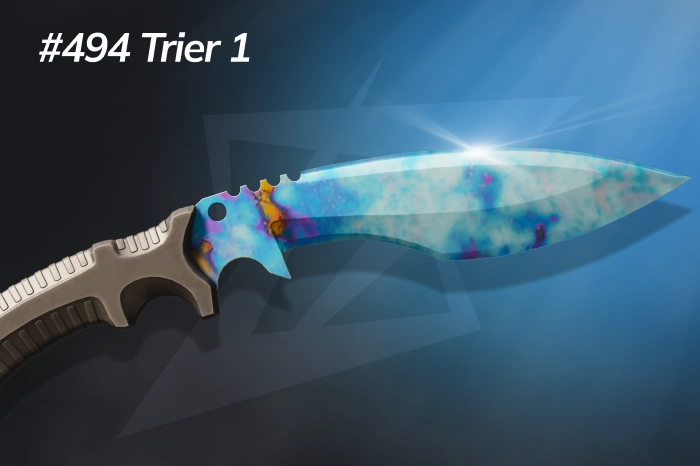
Pattern #494 features a playside blue percentage of 92.55%, which is the highest possible you can get for the Kukri Knife, making it the number one pattern. The gold and purple stains are mostly found at the bottom of the knife, meaning you get a completely blue tip.
Pattern #770
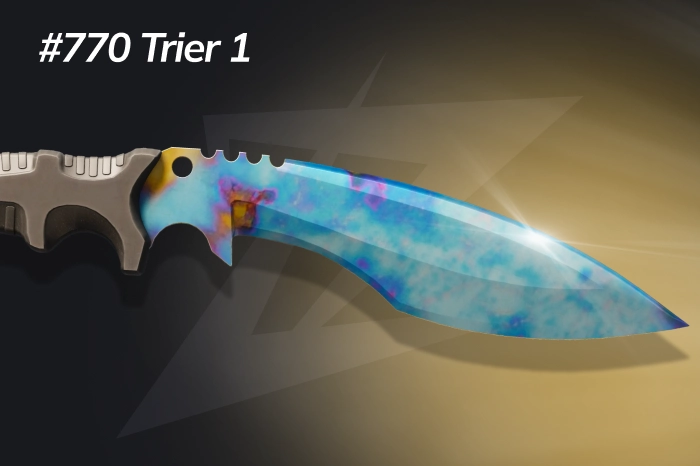
Pattern #770 is easily considered the number two pattern, featuring a playside blue percentage of 91.36%, which isn’t too far off #494. The blue placement on this pattern is also phenomenal, as the gold colors are found at the bottom of the blade, so the entire top side of the knife is blue.
Tier 2 Patterns
If Tier 1 patterns are too pricey, you can always go for Tier 2 ones. Kukri Knife Blue Gems in this tier are still very solid options that still feature lots of blue coverage.
Pattern #130
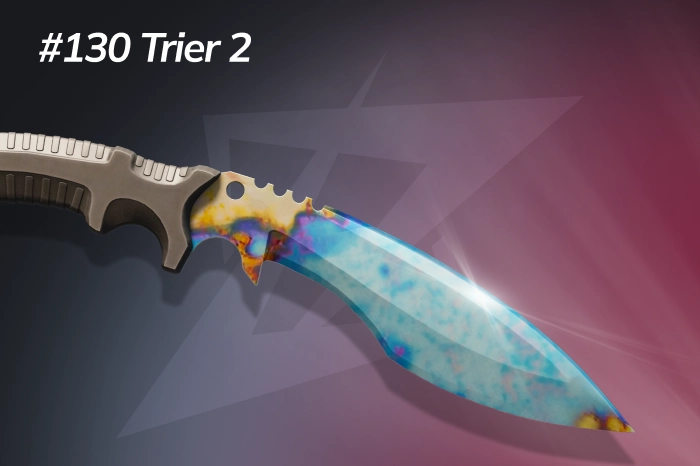
Tier 2 patterns do see a noticeable dip in blue percentage compared to Tier 1s, as pattern #130 is 78.09% blue on its playside, but those are still some very solid numbers.
Though it’s less than 80% blue, the placement matters – pattern #130 is almost completely blue on the top side, making it one of the best Tier 2 patterns out there.
Pattern #283
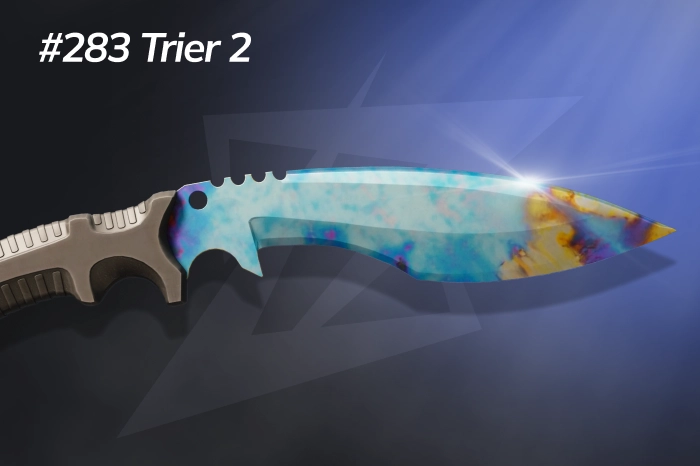
If you’re looking for another potential Tier 2 pattern to go for, we’ll point you towards #283, which is 77.12% blue on its playside. This one does have evident gold marks around its tip, making it a solid option if you’re into that.
Tier 3 Patterns
The Tier 3 mark is generally where Kukri Knife Blue Gem patterns become somewhat affordable. So, if you’re looking for good budget options, this is the tier you should be staying at.
Pattern #985
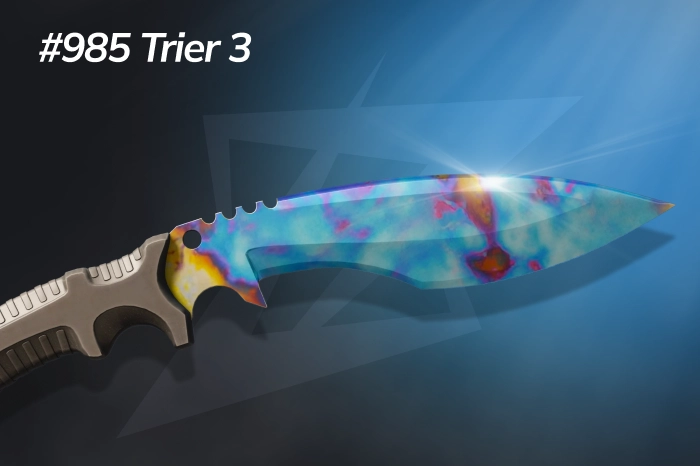
Pattern #985 has one of the highest playside blue percentages at this tier, with an applaudable 78.76%. However, you’ll see a lot of purple marks around the top of the knife, which could be a dealbreaker for those looking for full blue tips.
Pattern #811
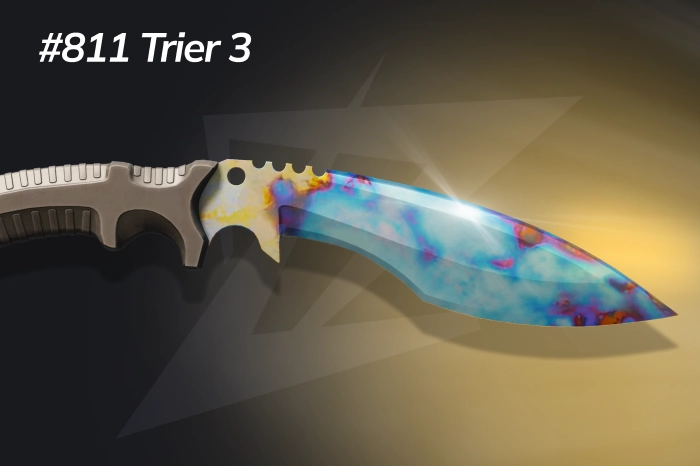
Up next, we have pattern #811, which is 71.0% blue on its playside. The numbers might not seem great, but the blue placement is very solid on this one. Almost all of the gold colors are at the bottom of the blade, giving you an almost full-blue top.
Tier 4 Patterns
The lowest Kukri Knife Blue Gem tier is Tier 4. Patterns in this category barely qualify as a Blue Gem, so the options aren’t the best. Still, they are way more affordable than higher tiers, making them a good option if you don’t want to spend too much money.
Pattern #803
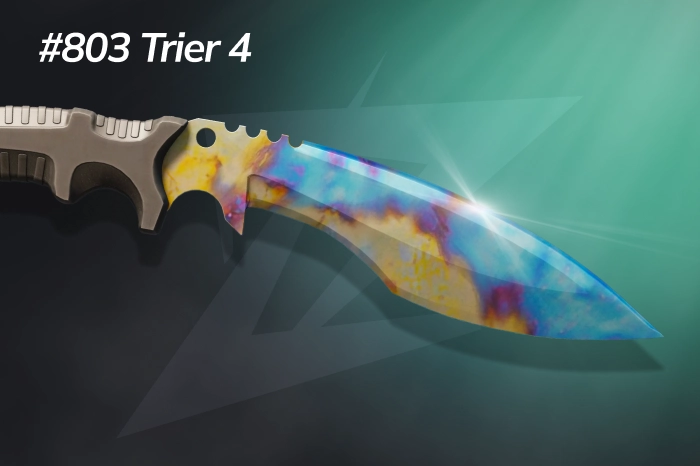
Pattern #803 is one of the best Tier 4 Kukri Knife Blue Gem patterns, yet it only features a playside blue percentage of 48.66%. However, the real appeal of this knife is that it’s 44.77% blue on its backside, giving you a Blue Gem on both sides.
Pattern #89
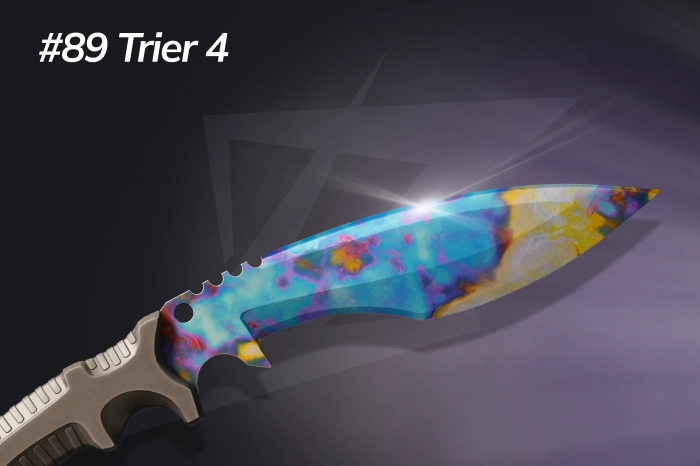
Last but not least, we have pattern #89 with a playside blue percentage of 57.92%. Yes, the percentage is higher than pattern #803, but the blue placement on this one isn’t great – most of the blue is found at the bottom half of the knife, giving you a big golden tip.
Wear Conditions Can Change the Look of a Blue Gem
As we briefly touched on above, you also have to factor in wear conditions to your Kukri Knife Blue Gem, as float and wear can definitely affect the appearance of your knife.
The best conditions for the Blue Gem Kukri Knife are of course Factory New and Minimal Wear. If you want the best out of your Blue Gem, make sure to hunt for these two conditions.
Lower conditions such as Field-Tested, Well-Worn, and Battle-Scarred also exist, but the Kukri Knife Blue Gem pattern will obviously look more damaged and worn out.
It’s also worth noting that wear levels on the Case Hardened skin works a little differently from other skins in the game. Normally, you’ll see scratches on skins with higher wear. But for the Case Hardened, you won’t see scratches – float mainly affects the cleanliness and brightness of the skin.
That’s why Factory New and Minimal Wear floats look much brighter than Field-Tested and Well-Worn ones.
Still, pattern seeds and Blue Gem tiers generally take heavier priority than wear levels. A Tier 1 Blue Gem pattern in Field-Tested is almost always going to be more expensive than a Tier 3 Blue Gem with pristine float.
Does Float Matter for a Kukri Blue Gem?
Generally, yes, float does matter for a Kukri Knife Blue Gem. If you’re looking to ball out and buy expensive skins like a Blue Gem, then you’d love to have the lowest float possible, right?
For example, low float values can make an already desired pattern even more attractive. Imagine getting your hands on the number one pattern and it has a very good float value – you’re living the dream. Extremely low floats, like 0.01, can also receive collector premiums, as diehard traders are often willing to overpay for skins in that condition.
If you have a top-tier pattern seed with an excellent float, you can easily sell that for a ton of cash. On the other hand, if you have a regular seed with a strong float, all you have is a clean Case Hardened skin, but not necessarily a Blue Gem.
So, even though pattern seeds are more important, you should never evaluate a Blue Gem from the seed alone – float values are always worth checking out.
How Much Can a Kukri Blue Gem Be Worth?
It’s hard to pinpoint how much a Kukri Knife Blue Gem can be worth, as there are numerous factors to consider. You’ll have to go over a pricing ladder to evaluate how much a specific one is worth.
Standard Case Hardened
If we’re looking at normal Case Hardened skins – the ones without Blue Gem patterns – we’re mainly looking at standard market prices. Wear levels and float values play a major role in these ones, but that’s about it.
Blue-Heavy Patterns
If a Kukri Knife Blue Gem starts having heavy blue coverage – enough to qualify it as a Blue Gem – then the prices start rising here. As we’ve learned above, we’re mainly looking at the pattern seed quality and which Blue Gem tier it falls into.
Tier 1 Blue Gems
Among Blue Gems, Tier 1 is the highest tier, and that’s where collectors start paying premium prices. The prices for Tier 1 Blue Gems are noticeably higher than the other tiers, as they are among the best patterns you can get.
Number One Patterns
Pricing can move into an entirely different category once we head into the best of the best patterns, like patterns #494, #770, and #575, which are considered the top three patterns in the game. These bad boys can sell for substantial premiums.
How to Check a Kukri Blue Gem Pattern Before Buying
If you’ve learned anything from what we’ve discussed earlier, it’s that pattern seeds and float values play an extremely important role in pricing Kukri Knife Blue Gem patterns. So, you need to know how to check these numbers yourself.
Here’s a step-by-step guide on how you can check a Kukri Knife’s pattern index and float:
- Find the item’s inspect link. Most trading sites will give you the direct inspect link to the item.
- Once you have the inspect link, open it in the CS2 client.
- In the inspect menu, hover your mouse over the “i” icon at the bottom, and you should see additional information.
- Here, you can see the skin’s pattern index, which is mainly what we’re looking for. Then, also check for its float value.
- You can compare this seed against recognized Blue Gem patterns so you know what tier the index falls under.
- While you’re at it, you can also inspect the playside and the backside to see the skin’s blue coverage. Remember that the placement of the blue also matters.
So, this is always something you should do whenever you buy (CS2) CS:GO skins, especially Kukri Knife Blue Gems. Make sure the seller is selling an actual Blue Gem and not misleading you with false information.
Common Kukri Blue Gem Buying Mistakes
If you’re looking to buy a Kukri Knife Blue Gem for yourself, make sure to avoid these common rookie mistakes:
- Only looking at the percentage – Though high percentages are nice, it also matters where the blue colors are on the knife itself. Remember that placements matter.
- Ignoring the pattern seed – This is one mistake you definitely don’t want to make. Always verify the seed yourself.
- Paying Blue Gem prices for ordinary patterns – If you’re paying Blue Gem premiums for a completely normal Case Hardened pattern, you’re probably getting scammed.
- Ignoring float values – Though patterns matter more, float values are always worth checking out.
- Looking at only one side – Remember that a skin has two sides. Though the playside is more important, considering the backside also never hurts.
- Trusting a seller’s “Blue Gem” label – There are always malicious traders out there trying to trick you. Always inspect the knife in question and verify whether it’s actually a real Blue Gem.
Is a Kukri Blue Gem a Good Choice for a Collector?
Whether the Kukri Blue Gem is a good investment really depends on what you’re looking for.
Collectors generally seek out Blue Gems because they feature rare patterns and have a limited supply. It’s obvious why high-tier collectors would want these in their inventories.
However, it’s also worth noting that pattern premiums can be subjective, and that market liquidity can vary. There’s no guarantee the price of a Kukri Knife Blue Gem will appreciate in the future.
So, if you’re looking to flip skins and make a profit, a Kukri Knife Blue Gem might not be what you’re looking for. For a skin like this, personal preference should matter as much as resale potential.
Buying a Kukri Blue Gem: What Should You Prioritize?
So, if you’re still a little confused or need some time to process all the information we provided above, we’ll give you a simple hierarchy. This is the order you should be considering:
- Seed → 2. Visual quality → 3. Float → 4. Price → 5. Extras.
If you’re selling one of the cheapest CS2 knives, you’ll only have to worry about floats. But when working with Blue Gem knives, pattern seeds and blue placement always take the top priority. Then comes everything else.
Kukri Blue Gems occupy a specialized premium market segment that works differently than your typical skins.
Selling a Kukri Blue Gem Without Undervaluing It
If you own a Kukri Knife Blue Gem and are looking to sell it, let’s make sure you understand your product and know the real value.
Before you try to sell CS2 (CS:GO) skins, you should always check the pattern seed and float. Then, verify whether your knife has a Blue Gem pattern and compare other listings of the same pattern. This should give you a good idea of its price.
If you do have a Blue Gem pattern in your hands, do not sell it for generic Case Hardened prices, and also avoid the highest sale ever recorded. Look for recent sales that happened less than three months ago.
Conclusion
So, if there’s one thing we’ve learned, it’s that Kukri Knife Blue Gems are extremely rare skins that don’t go for typical market prices. The pattern index plays a very important role in its value and desirability.
If the Kukri Knife Blue Gem is a skin you’re targeting, make sure you do your research before buying one. Verify the pattern seed and try buying one with a desirable pattern, which will make things easier if you decide you want to resell it in the future.
Make sure to transact safely and use trusted marketplaces like Skin.Place so you don’t get scammed.
FAQ
Is Kukri Case Hardened pattern 32 considered a tier 3?
No, a Kukri Knife Case Hardened with pattern index #32 is not considered a Blue Gem at all. It is an ordinary pattern.
Which Kukri Knife is best?
The best Kukri Knife Blue Gem is pattern #494, which is widely considered the number one pattern in the game.
When did Kukri Knife come out CS2?
The Kukri Knife was officially released in Counter-Strike 2 on February 6, 2024. The Case Hardened knife also came out at the same date.
What is the best blue gem for a Kukri knife?
The best Blue Gems for the Kukri Knife are Tier 1 Blue Gems. Some of the best patterns in that tier include #494, #770, and #575.

Subscribe
0 Comments